
The Most Common Excuses When Buying a Used Car (and What They Really Mean)
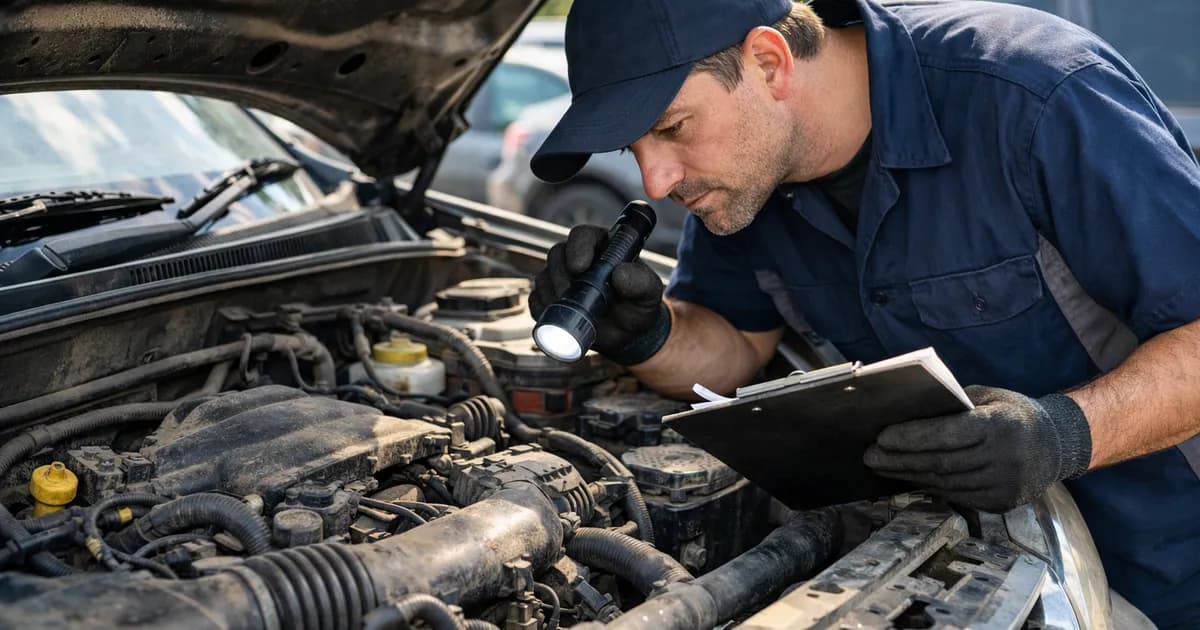
When you go to see a used car, certain phrases come up again and again. They sound reasonable, but many times they hide real problems the seller does not want to admit. Knowing them in advance helps you avoid falling for them and know what to ask when you hear them.
What does it mean when the seller says a noise is normal for that model?
Sometimes it is true. Some engines are noisier than others, and some models have known noises that any owner forum will confirm. But that phrase is also used to mask timing system issues, worn bearings, dirty injectors, or engine tensioners that are about to fail.
The difference between a normal noise and a worrying one is not always obvious if you do not know the model. The best thing to do is get informed before you go to see the car: look for model-specific forums about common noises and, if the noise you hear does not match what other owners describe, be cautious. A rhythmic metallic knock at idle, a high-pitched whistle when accelerating, or a rattle when cold are signs that deserve a professional inspection before buying.
Is the air conditioning really just in need of a recharge?
It might be. An AC gas recharge costs between 50 and 100 euros and is a routine service. But it could also be the compressor (between 400 and 900 euros), a leak in the system that needs to be found and repaired, or an electrical problem in the fan or control unit.
What the seller presents as a minor issue can end up being an expensive repair. If the AC is not cooling, do not assume it is something simple. Always test it during the test drive, let it run for at least 10 minutes, and make sure it actually cools, not just blows air. If you see the seller avoiding the test or making excuses, you already have your answer.
How can I tell if the miles the seller says are real?
If someone feels the need to tell you without being asked, pay attention. That unsolicited insistence often reveals that the subject is sensitive.
Look at the wear on the steering wheel, pedals, and driver’s seat. A car with low mileage but a polished steering wheel and worn pedals does not add up. You can also check whether the maintenance history matches the mileage shown. Service invoices and vehicle inspection records log mileage, and if the numbers do not rise logically from one service to the next, there may have been tampering.
If you want to go further, there are vehicle history verification services that cross-check data from inspection records, insurers, and authorized workshops. With the plate number or VIN, you can get a report in minutes that confirms or contradicts what the seller says.
Why do they always say they are selling the car because they bought another one?
It is the most common reason and often it is true. But sometimes it is used to avoid the awkward question: why are you really selling it?
It is worth asking what car they bought and why they changed. If they moved from a large diesel to a small electric car, that makes sense. If the answers are vague, they cannot remember clearly what they bought, or they change the subject, the real reason may be that the car has problems and they want to get rid of it. A seller who has nothing to hide answers quickly and in detail.
Is it a good sign that a car runs perfectly but is not used?
Not necessarily. A car that has been parked for a long time has its own problems. Dry rubber seals, a degraded battery, stuck brakes, fluids that deteriorate over time. A car that has sat unused is not automatically in good condition.
Ask how long it has been sitting and pay special attention to rubber parts and fluids. If it has been parked for more than a year, assume it will need a full recommissioning: oil, filters, brake fluid, coolant, battery, and probably tires. Add that cost to the car’s price before deciding whether it is worth it.
Can I trust a car that has just passed a state vehicle inspection?
It is good that it is valid. But the state vehicle inspection is a legal minimum, not a guarantee of good condition. A car can pass the inspection and still have pending repairs that are not required for the test but are expensive: soft shocks that are not yet a major defect, a timing system close to failure, or a slipping clutch that is not measured in the inspection.
Do not relax just because it has a recent sticker. The inspection confirms that the car can legally be driven, not that it is mechanically sound. Those are two different things, and it is important not to confuse them.
Does it really matter if a car had only one owner?
Having one owner guarantees nothing. One owner who did not maintain the car, drove aggressively, or ignored dashboard warnings can leave it in worse condition than three owners who took good care of it.
What matters is the maintenance history, not how many hands it has passed through. A car with three owners and a complete service history is a better buy than a one-owner car with no invoices at all. If the seller boasts about being the only owner but has no workshop invoices to back it up, the story does not add up.
What does it mean when the seller says the price is negotiable without being asked?
If a seller starts by saying this without you asking, they have probably been trying to sell the car for a while and have not succeeded. That is not necessarily bad, but ask yourself why it is not selling. It may simply be the price, because it is above market value. But it may also be that other buyers have seen it, spotted something, and walked away.
A price that drops a lot before you have even asked is an invitation to ask more questions, not to buy faster. Use that room to negotiate with facts: the car’s real condition, what it will cost to put right, and what a similar car in better condition is worth.
How do I avoid falling for a seller’s excuses when buying a used car?
Excuses sound convincing and sometimes they are true. The problem is believing them without checking anything. The best defense is to arrive prepared: know the common used car problems for the model, bring a checklist of things to inspect, and do not let urgency or the seller’s friendliness replace a real inspection.
With AskPancho, you can inspect the car step by step while it is in front of you. Pancho guides you with questions tailored to the specific model you are looking at, asks for specific photos, and gives you a report with what it found. That way, you do not depend on what the seller tells you. If you are also comparing private seller vs dealer used car, it helps to be clear before you decide.