
Private Seller vs Dealer Used Car: Which Is Better?
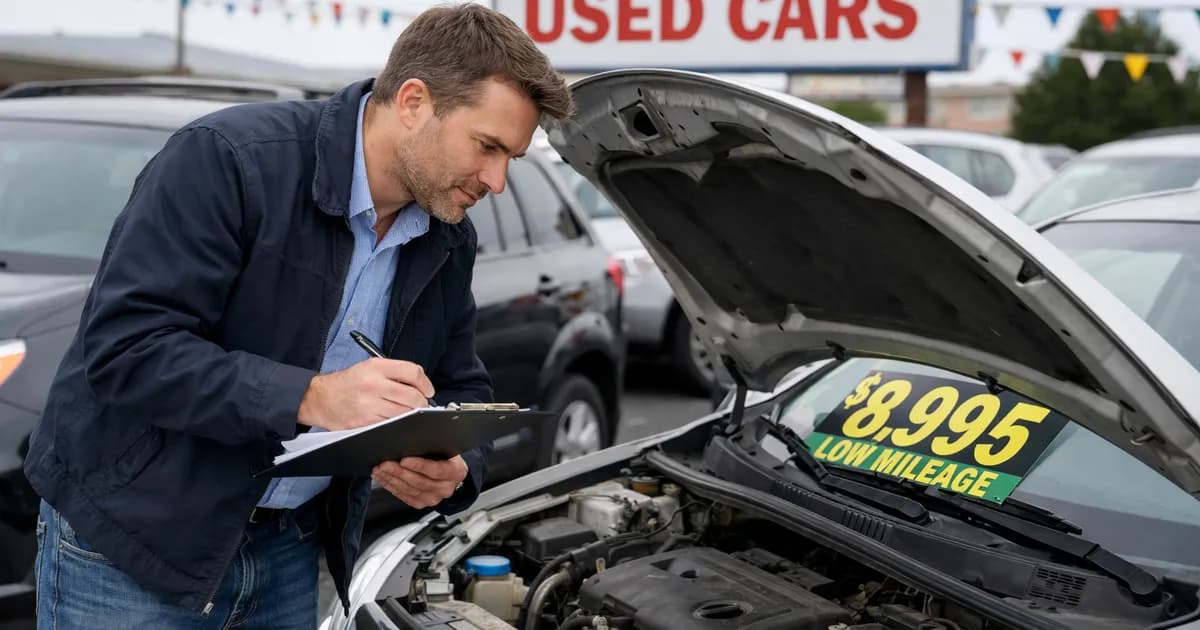
One of the first decisions you make when looking for a used car is whether to buy from a private seller or a dealer. Each option has real advantages and pitfalls that are not always obvious at first glance. Neither is automatically better. What makes the difference is how you inspect the car and what information you get before paying.
Why is a private seller usually cheaper than a dealer?
A private seller does not have a showroom, employees, or a commercial margin to add to the price. That is why the asking price is usually lower than a dealer's for the same car. That is perfectly normal and there is nothing wrong with it.
But cheaper does not mean better value. A private seller may be selling the car precisely because it is about to develop an expensive problem, and you do not have the protection you would get from a professional. In addition, many private sellers do not know the car's real condition because they have never had it properly checked. They are selling what they believe is fine, not what they know is fine.
At a dealership, the price includes costs you do not see but that give you certain protections: vehicle preparation, paperwork in order, and someone to go back to if something goes wrong. The question is not just how much you pay, but what you get in return.
What warranty do I get if I buy from a private seller versus a dealer?
In the United States and in most European countries, a dealer is legally required to give you a minimum warranty on used cars. In practice, that warranty is often at least one year for used vehicles, although it may vary depending on the applicable law and what is agreed in the contract.
A private seller does not have that obligation. That does not mean a dealer cannot try to dodge problems, but at least you have a legal framework to fall back on. With a private seller, once you pay and drive away, making a claim is much more complicated. The only route would be to prove a hidden defect, which takes evidence and time.
Before signing anything at a dealership, read the warranty carefully. Check exactly what it covers, whether there are exclusions, and what process you must follow to make a claim. A warranty that is impossible to enforce in practice is no better than having none at all.
How can I tell if the car's maintenance history is reliable?
A good dealer should be able to provide you with a complete history: maintenance, repairs, number of owners, and recorded incidents. Many dealers work with vehicle history reports that include data from the DMV or European databases.
A private seller may have kept all the receipts, or may not have them at all. Some people keep everything organized; others do not have a single invoice. If there are no documents, there is no way to know what was done and what was not. And what was not done, you will end up paying for.
In both cases, always ask for:
- Service book: check that the maintenance stamps are present and that the mileage is consistent.
- Workshop invoices: these show what was replaced, when, and at what mileage.
- State vehicle inspection reports: mileage is recorded at each inspection, and it is a figure the seller cannot alter.
How does seller pressure affect my buying decision?
With a private seller, the pressure is often emotional. They may be in a hurry because they need the money, because they have already bought another car, or because they are tired of showing it. That urgency can rub off on you and push you to decide quickly.
At a dealership, the pressure is more professional and calculated: discounts that end today, another interested buyer coming this afternoon, the last unit in that trim level. These are sales techniques, and they work because they create a sense of scarcity.
In both cases, do not let someone else's sense of urgency make your decisions for you. If the seller is rushing you, that is one more reason to take your time. A good car at a fair price will still be there tomorrow. And if it is not, another one will come along.
Is a dealer car usually in better condition than a private seller car?
A reputable dealer prepares cars before selling them: professional cleaning, a basic inspection, some minor repairs, and sometimes new tires or brake pads. That does not mean the car is perfect, but it does mean it starts from a minimum standard.
A private seller sells the car as is, with its strengths and its flaws. The good thing is that you often see the car in its real condition, without any makeup. There is no bodywork polish or new air freshener masking odors. What you see is what you get.
The risk is the same in both scenarios: there may be defects you cannot see. The difference is that a dealer has more resources to hide them and a private seller has fewer incentives to invest in concealing them. That is why a full inspection is equally important in both cases.
What problems are more common in each type of sale?
A private seller may hide defects through ignorance or on purpose. The most common ones are not mentioning repaired damage, minimizing engine noises, omitting the fact that the car has been in an accident, or overstating how little it has been driven.
A dealer may dress up a car so it looks better than it really is. Touch-up paint to hide scratches, professional cleaning that conceals interior wear, and paperwork handed over in a rush so you do not read it carefully.
The risk exists in both cases; only the form changes. That is why checking the car thoroughly is just as important no matter where you buy it.
How to negotiate the price of a used car with more room for a better deal?
With a private seller, there is usually more room to negotiate, especially if the car has been listed for a while. They do not have a price set by a sales department, but one they based on what they saw on listings. If you present real data about the car's condition, they are more likely to lower the price.
At a dealership the prices are tighter, but you can negotiate extras: an extended used car warranty, a repair included, or new tires. Sometimes those extras are worth more than a few hundred dollars off. Do not focus only on the number.
So which is better: buying from a private seller or a dealer?
It depends on the car, the seller, and you. What does not change is that you need to inspect the car just as carefully in both cases. A dealer warranty can protect you if something goes wrong afterward, but it does not replace a proper pre-purchase inspection. And the lower price from a private seller is useless if the car lands you with a repair bill of thousands of dollars the next month.
The best deal is not the cheapest one or the one with the most warranty on paper. It is the one you have inspected well, negotiated with facts, and closed with a clear contract. It does not matter where you buy it.
With AskPancho, you can do that wherever you are. Pancho guides you through the inspection with specific questions for the model you are looking at, asks for photos, and gives you a report with a detailed assessment. Whether you buy from a private seller or a dealer, what matters is what you find in the car.