
Buying a Cheap Used Car: What People Forget When They Rush
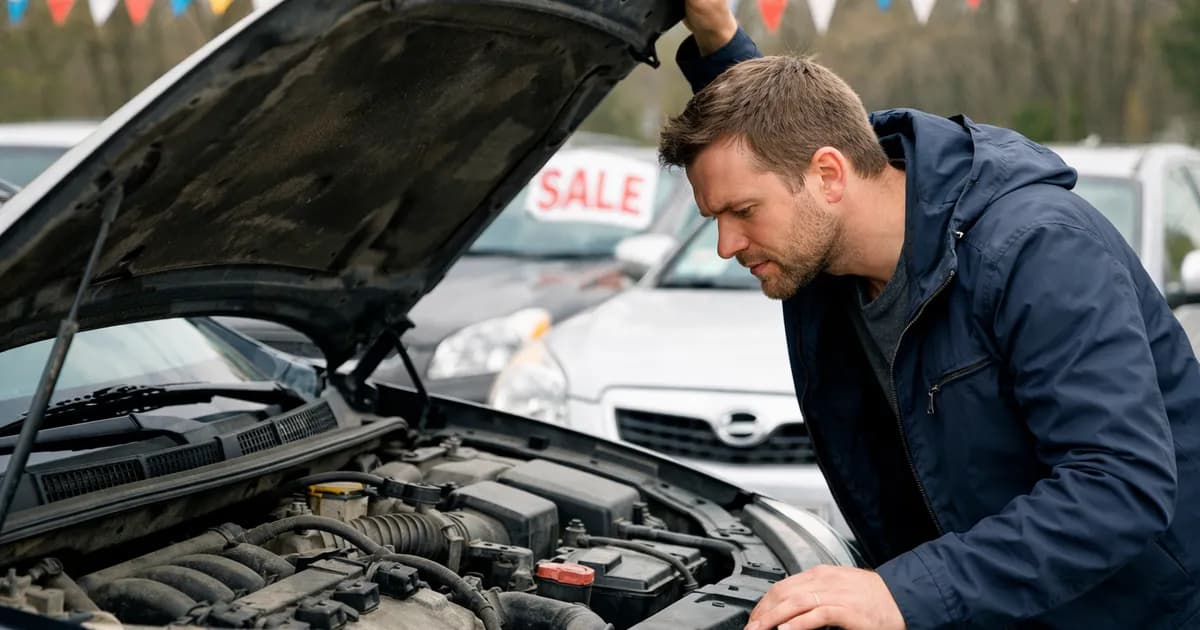
Most bad used car purchases are not caused by hard-to-detect mechanical problems. They happen because people fail to prepare, rush the process, and are afraid to say no. They are simple things, but that is exactly why they are overlooked. With a little preparation before you leave home and a bit of calm during the viewing, you can save yourself thousands and a lot of frustration.
What should I check before going to see a used car?
Before you go to see anything, there are things you can do from home that will save you time, money, and a few pointless visits.
- Ask for extra photos and the license plate: if the listing has very few photos or they were taken from very flattering angles, ask for more. Make sure you can see the underbody, the engine, the interior as it really is, and the dashboard turned on. And ask for the license plate: with it, you can verify a lot of information about the vehicle without leaving your sofa. If the seller refuses to give you the plate, be cautious.
- Ask for invoices for the latest repairs: a well-maintained car has paperwork. If there are no invoices for important items such as the timing belt, the clutch or the brakes, that cost will fall on you. And that changes the real price of the car a lot.
- Check whether there are any outstanding liens: fines, seizures, an unpaid finance agreement... buying a car with liens means inheriting someone else’s problems. In the US, you can request a Vehicle History Report or check with the DMV using the license plate. Always do this before closing anything. A report costs a few dollars and can save you from a problem worth thousands.
- Research the model: every car has known weak points. Spend 15 minutes looking through forums to see what problems that exact model with that engine usually has. That way, you’ll know what to pay special attention to when you see it in person. For example, some models have chronic timing chain issues, others have electronics problems, and others suffer from turbo failures. Knowing this in advance gives you a huge advantage.
Why is it so important to inspect a car in natural light?
It sounds obvious, but many people go to see cars late in the afternoon or inside garages. In poor light, dents, paint shade differences, and rust go unnoticed. A seller who wants to hide a bodywork defect knows perfectly well that it is harder to spot in low light.
The best option is to go at midday and outdoors. Walk around the car and look at it from different angles with the sun hitting the bodywork directly. Paint shade differences (a sign that a panel has been repainted after a crash) are much easier to see in the sun than in the shade. Run your hand over the panels: a repainted area usually has a slightly different texture to the touch.
If the seller can only show it to you at night or in an underground parking garage, at the very least bring a good flashlight and come back another day in daylight to confirm. If they make excuses to avoid that, that is another reason to be suspicious.
How do I stop rushing into a bad used car purchase?
This is probably the most important part of all, and it has nothing to do with mechanics.
- Allow plenty of time: if you arrive with minutes to spare because you have somewhere else to be afterward, you will skim over things and make quick decisions. Quick decisions with used cars usually turn out expensive. Block out at least two hours for the full visit.
- Take all the time you need to test it: start the engine with the hood open and listen. Sit in every seat. Open and close every door. Test the windows, the air conditioning (let it run for 10 minutes to see if it really gets cold), the lights, the wipers, the radio, and the handbrake. Don’t hold back. That is exactly why you are there.
- Take a long test drive: do not settle for driving around the block. Drive for at least 15 or 20 minutes on different kinds of roads: city streets, highway, uphill. Test every gear, brake firmly, listen for strange noises, and pay attention to how the steering responds. Transmission, clutch, and suspension problems show up while driving, not while looking.
- If the seller does not want you to test something, walk away: there is no good excuse. A seller who rushes you, does not let you drive the car, or puts up barriers when you try to inspect something is hiding a problem. Get up and leave. There are more cars on the market.
How can I inspect a car properly if I am not a mechanic?
You do not need to be an expert to inspect a used car thoroughly. What you need is a guide that tells you what to look at step by step so nothing important gets missed.
The critical points anyone can check without special tools are: tire condition (tread depth and age), fluid levels and color (black oil is normal, mayonnaise-like oil is not), brake pad condition (visible through the wheels on many cars), and exhaust smoke (persistent white or bluish smoke are bad signs).
AskPancho knows the weak points of each model and guides you step by step while you are standing in front of the car. It tells you what to check, what to test, and what questions to ask based on the exact vehicle you are viewing. It asks for photos of the critical points and gives you a report with what it has detected. It is like having an expert in your pocket, but without having to coordinate schedules with anyone or pay for a shop inspection.
What mistakes should I avoid when negotiating and closing the deal?
You have seen it, tested it, and inspected it. Now it is time to talk money, and this is where costly mistakes also happen.
- Set a maximum budget and do not go over it: decide before you leave home and include everything: the car price, title transfer, insurance, taxes, and any maintenance you expect to need. If it goes over, it is not your car. Do not let the excitement of the moment push you past your limit. The used car market is huge, and there is always another car.
- Use the defects you found to negotiate: every scratch, every pending repair, every fault is a reason to lower the price. Do not feel awkward about mentioning them. If you have done an inspection with AskPancho, you have a documented report that supports your position. It is not an opinion, it is data.
- Never leave a deposit without a written contract: it does not matter how nice the seller seems or how good the offer looks. Without a document that records the price, the car’s condition, the mileage declared, and the terms of sale, a deposit is money you could lose with no protection at all.
- Do not pay everything in cash without a paper trail: a bank transfer leaves a record of the transaction. Cash does not. If a problem arises later, you need to be able to prove how much you paid and to whom. Also, in the US, cash payments between private individuals may be limited depending on the transaction and reporting rules.
Following these steps does not guarantee that you will not find any problems, but it does greatly reduce the chances of ending up with a car that hides expensive surprises. The used car market is full of good opportunities, and with the right preparation you can take advantage of them without taking unnecessary risks.