
How Often to Replace a Clutch and How to Tell It’s Near the End
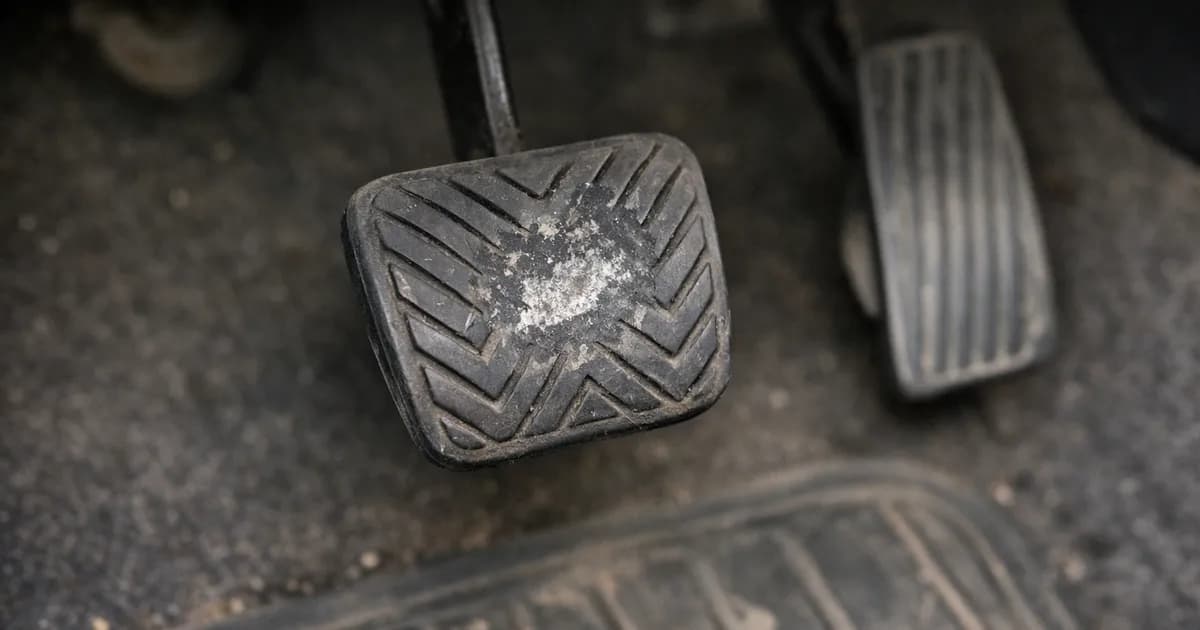
The clutch is one of the most expensive and most dreaded repairs on a manual transmission car. It doesn’t have a fixed replacement interval like the timing belt, but it does show clear signs when it’s wearing out. If you know them, you can get ahead of the problem and make a smart decision instead of getting stranded in the middle of the road.
How Many Miles Does a Car Clutch Last?
The lifespan of a clutch depends a lot on how the car is driven. Under normal conditions, a clutch can last between 100,000 and 200,000 kilometers. But that range is very broad because many factors come into play.
What shortens clutch life the most:
- Heavy city driving: traffic jams, constant stop-and-go driving, and frequent starts at traffic lights. Every time you press the clutch pedal, the clutch disc rubs a little and wears down. The more often this happens each day, the faster it wears out.
- Hills and inclines: starting on a slope puts more strain on the clutch than starting on level ground. If you live in a city with lots of hills, the clutch will not last as long.
- Resting your foot on the pedal: many drivers unknowingly keep their foot on the clutch pedal while driving. That constant pressure, even if slight, keeps the disc partially engaged and causes unnecessary wear.
- Holding the car on a hill with the clutch: using the bite point to keep the car still on an incline instead of the parking brake burns the disc at an impressive rate.
A driver who mostly uses highways and open roads can easily reach 200,000 km without major issues. Someone who drives in the city every day may need a replacement before 100,000 km. If you’re considering a high mileage used car, the previous usage pattern is key information you should ask for.
How Do I Know If My Car Clutch Is Failing?
The clutch usually gives warning signs before it fails completely, and that’s an advantage. If you know what to look for, you can plan the repair instead of being caught off guard.
- Slipping: you press the accelerator, the engine revs rise, but the car doesn’t gain speed as it should. This is the clearest sign that the clutch disc is worn. It’s usually more noticeable in higher gears (fourth, fifth, or sixth) and when going uphill, because that’s when the engine is putting more power through and the worn disc can no longer grip properly.
- Burning smell: if after a hill climb or a hill start you notice a smell like burnt toast or burnt material, the clutch is under strain. If it only happens once in a while, it’s not serious, but if it keeps happening, the wear is accelerating significantly.
- Difficulty shifting gears: if the gear lever feels stiff, resistant, or makes metallic noises when shifting, the clutch may not be disengaging properly. This could be the disc, but it could also be the release bearing or a hydraulic issue.
- Soft or stiff pedal: a change in clutch pedal feel, whether it becomes very soft (sinks with little resistance) or very stiff (hard to press), usually points to a problem in the hydraulic system (master/slave cylinder or hose) or in the disc itself.
- Vibrations or jerking when starting off: if the car jerks when you release the clutch in first gear instead of moving off smoothly, something is not right. It could be a worn disc with uneven wear or a damaged flywheel.
Some of these symptoms can be confused with other mechanical problems. That’s why the test drive is essential: accelerate in higher gears, start on a hill, and see whether the car responds smoothly. If there’s any doubt, a workshop can confirm the clutch’s condition in just a few minutes with a quick inspection.
How Much Does It Cost to Replace a Car Clutch?
It’s an expensive repair, mainly because of labor. To reach the clutch, the gearbox has to be removed, and that takes between 4 and 8 hours of work depending on the car. In Spain, the total price is usually between 600 and 1,200 euros for a standard clutch kit (disc, pressure plate, and release bearing).
If the car has a dual-mass flywheel and that also needs replacing, the bill can rise to 1,500 or even 2,000 euros, because that part alone costs between 300 and 500 euros.
One tip: when the gearbox is removed to replace the clutch, it’s worth asking the shop to inspect the flywheel. If there’s play or signs of overheating, it’s better to replace it then. If you leave it and it fails later, everything has to be taken apart again and you’ll pay all the labor a second time.
When asking for a quote, always ask whether it includes the full kit (disc, pressure plate, and bearing) and what warranty the repair comes with. Reputable shops usually warranty the labor for at least one year.
When Is It Worth Replacing the Clutch, and When Isn’t It?
It depends on the car. If the vehicle is worth around 2,000 euros and the clutch replacement will cost 1,200, you need to think carefully. The repair is more than half the car’s value, and at that price it may make more sense to look for another vehicle.
But if the car is in good overall condition, has a clean maintenance history, and the only issue is the clutch, it usually is worth it. A 6,000-euro car with a new clutch for 800 euros is still a better buy than a 5,000-euro car with a clutch that’s about to fail.
What never pays off is ignoring the problem. Driving with a slipping clutch accelerates wear on the flywheel, and that’s where the bill gets much bigger. A dual-mass flywheel damaged because the clutch wasn’t replaced in time can double the repair cost.
How Do I Check the Clutch When Buying a Used Car?
Always test the clutch during the test drive. It’s not enough to start the car and drive normally. You need to push the car a little so the clutch tells you how it’s doing:
- Start in first gear on a hill: if the car vibrates, smells bad, or slips when pulling away, the clutch is worn.
- Accelerate in higher gears: select fourth or fifth gear at moderate speed and accelerate firmly. If the revs rise but the speed doesn’t follow, there is slipping.
- Listen when shifting: pay attention to any grinding, crunching, or resistance when changing gears.
- Feel the pedal: press the clutch several times and notice where it bites. If it bites very high, near the end of the pedal travel, the disc is worn. If it bites very low, there may be a hydraulic problem.
Ask the seller whether it has been replaced and request the invoice. It’s one of those repairs that makes the difference between a good price and one that hides a repair bill of more than a thousand euros. With AskPancho, you can inspect the car step by step, and Pancho will guide you so nothing slips through the cracks.