
The Most Important Things to Check on a Used Car
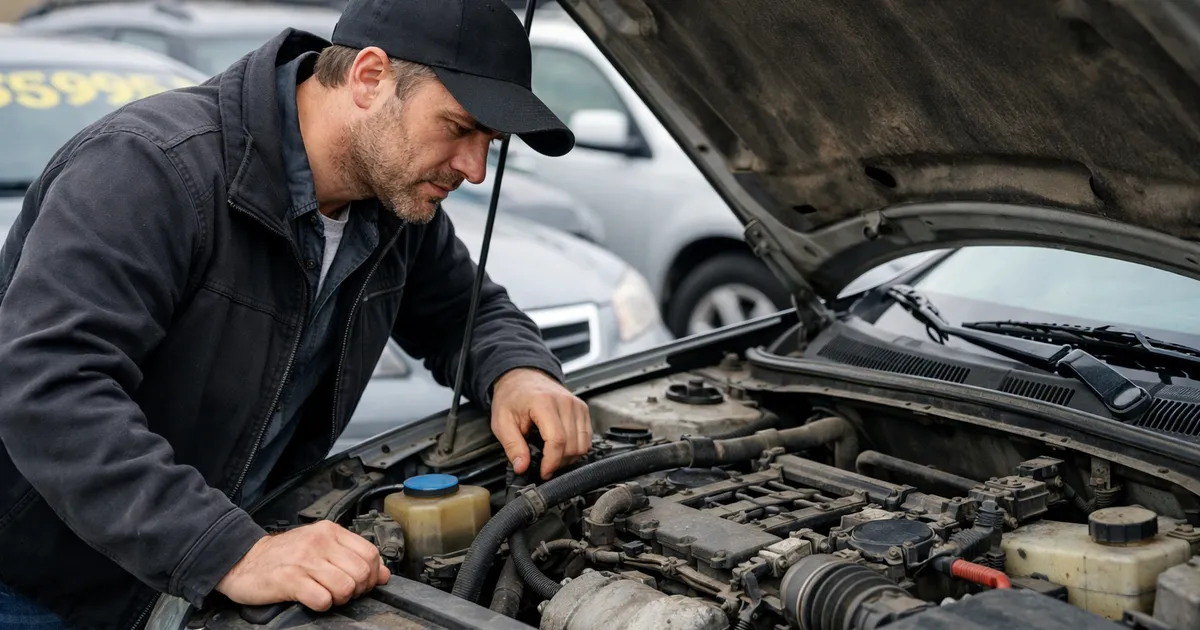
Inspecting a used car can seem complicated, but there are key points that tell you a lot about the true condition of the vehicle. You do not need to be a mechanic. You need to know where to look and what each sign means. This guide covers the critical points anyone can check without special tools.
What should I check first under the hood of a used car?
Start it cold. Ask the seller not to start it before you arrive. A cold engine tells you things a warm one hides: strange noises, difficulty starting, smoke on ignition. If the engine is already warm when you get there, ask yourself why.
Exhaust smoke: a little white vapor on a cold start is normal and should disappear within a minute. Blue smoke means it is burning oil (turbo or piston rings). Black smoke indicates combustion problems (injectors, particulate filter). Constant thick white smoke can point to a blown head gasket. None of these are cheap to fix.
Fluid levels: open the hood and check the oil and coolant. Thick black oil means it has gone a long time without being changed. If the oil looks milky (mayonnaise-like) on the filler cap or the coolant has traces of oil, there may be a serious head gasket problem. Also look under the car for fluid spots: oil, green or orange coolant, brake fluid.
How do I spot hidden body damage on a used car?
Differences in paint tone: look at the car from different angles and in good light (midday sun is best). If one panel is a slightly different shade from the one next to it, it has been repainted. And if it has been repainted, it probably took a hit. Run your hand over the panels: a repainted area often feels slightly different.
Panel gaps and seams: the gaps between body panels (doors, hood, trunk) should be even and symmetrical. If one side has a larger gap than the other, the panel has likely been removed, usually because of an impact. Compare the right side with the left.
Rust: check the underbody, wheel arches, lower door edges, and the tailgate. Surface rust is normal on older cars, but if you see eaten-away or perforated areas, it is a serious structural problem that may be irreparable or very expensive to fix.
What does the interior tell me about how the car was really used?
Overall wear: steering wheel, pedals, gear lever, driver’s seat. Wear tells you how much the car has been used. If the mileage is low but the interior is heavily worn (shiny steering wheel, smooth pedals, sagging seat), something does not add up. Also compare the wear on the driver’s seat with the passenger seat: a big difference confirms heavy use.
Moisture and odors: lift the floor mats and look for dampness, rust stains, or dried mud. Check the headliner inside. Smell the cabin. A musty or moldy odor points to leaks, and those can be expensive and hard to eliminate. A damp trunk is especially concerning.
Electronics: test everything: power windows, central locking, air conditioning (let it run for 10 minutes to make sure it really cools), heater, lights (all of them, including fog lights and reverse lights), windshield wipers, radio, Bluetooth, and the rearview camera if it has one. Electrical faults are annoying and sometimes expensive.
How do I check whether the transmission and clutch are in good shape?
Manual transmission: shift through every gear, including reverse. If it grinds, if a gear is hard to engage, or if the shifter has too much play, the transmission or clutch is worn. Pay special attention to the clutch: if it slips (the revs rise but the car does not accelerate proportionally) or the pedal engages very high up (near the end of its travel), the clutch disc is worn and replacement is near. That repair costs between 600 and 1,200 euros.
Automatic transmission: gear changes should be smooth and free of jerks. Test it uphill, downhill, and under hard acceleration. A poorly functioning automatic transmission is a very expensive repair, easily over 2,000 euros.
What do the brakes and tires tell me about the condition of the car?
Brakes: brake hard on a straight road. The car should stop in a straight line, without pulling to one side, without vibration, and without noise. If the steering wheel shakes when braking, the brake discs are warped. If there is a metallic noise, the pads are at their limit. Also test the parking brake: if the car moves with the parking brake engaged, it needs adjustment or repair.
Tires: check the tread on all four tires. If wear is uneven (more on one side than the other), there is an alignment or suspension issue. Also note whether all four tires are the same brand and model. Four different tires say a lot about how the car has been maintained. Also check the manufacturing date (DOT code on the sidewall): tires older than 6 years lose grip even if the tread looks fine.
How do I know if the suspension is in good condition?
Push down firmly on each corner of the car and release. The car should rise and fall once and then settle. If it bounces several times, the shocks are worn out. Bad shocks are not only uncomfortable; they also increase braking distance and make the car less safe in corners.
During the test drive, pay attention to whether the car follows road imperfections too much, makes sharp knocking noises over bumps (worn ball joints or bushings), or leans excessively in corners. A sharp metallic noise when going over a pothole or bump usually means a ball joint needs replacement: not very expensive, but it has to be done.
What documents do I need to check before buying?
Make sure the title or registration documents match the car (make, model, VIN). Check the date of the State Vehicle Inspection. Ask for the maintenance history and repair invoices from the shop. Verify that there are no outstanding liens or issues by requesting a Vehicle History Report using the license plate number.
Paperwork is not the most exciting part of the inspection, but it is the part that saves you the most trouble. A car without documents is a car with no verifiable history, and that is a risk you should not take. If you are buying from a private seller, also make sure the seller is the registered owner on the registration: if it does not match, the sale can become legally complicated.
How do I check all this without being a mechanic?
There are many points, and it is easy to forget one. The best option is to bring a checklist and follow it step by step, even if the seller is rushing you or the car looks perfect at first glance. The more attractive a car looks in the listing photos, the more important it is to inspect the details.
With AskPancho, you do not have to remember anything. You tell Pancho which car you are going to see, and it guides you through the entire inspection with questions tailored to the model and year, asks you for specific photos, and gives you a full report with a score and recommendations you can use to negotiate the price with real data.