
How to Check a Used Bike for Sale Before Buying It
Checking a second hand bicycle properly before you buy it does not require being a mechanic. It requires method, time, and not getting carried away by the urge to close the deal. Most problems can be spotted by paying attention in the right places. This guide shows you where.
What to check when buying a used bike before you go see it
Research the model, learn the most important points to inspect, and find out what tends to fail. A used mountain bike does not have the same weak points as a used road bike or a used e-bike. With that information, you know what to look for.
- Ask for detailed photos before meeting. Make sure the components are shown up close: the drivetrain, the brakes, the wheels, the frame. A side-view photo taken from ten feet away tells you nothing about the real condition.
- Ask for the serial number and check it in stolen bike databases before you go. If the seller will not give it to you, do not go.
- Check the market price for the model so you know whether the listing is reasonably priced or suspiciously cheap.
How to organize the visit to inspect a used bicycle in detail
Lighting matters just as much as it does with a car. In poor light, you will not see cracks in the frame, rust on components, or the true wear on parts. Arrange to meet at midday and outdoors. And give yourself plenty of time: if you are rushed, you will only skim over it.
Bring a charged phone to take photos of everything. A tape measure if you want to verify the frame size. And if you have a friend who knows bikes, it is better to go with someone than alone.
How to tell if a bike frame has cracks without being a mechanic
Inspect the frame carefully for cracks, dents, impacts, and rust. Pay special attention to the tube joints and the bottom bracket area. If the frame is carbon, run your hand over it and feel for irregularities that you may not see but can feel.
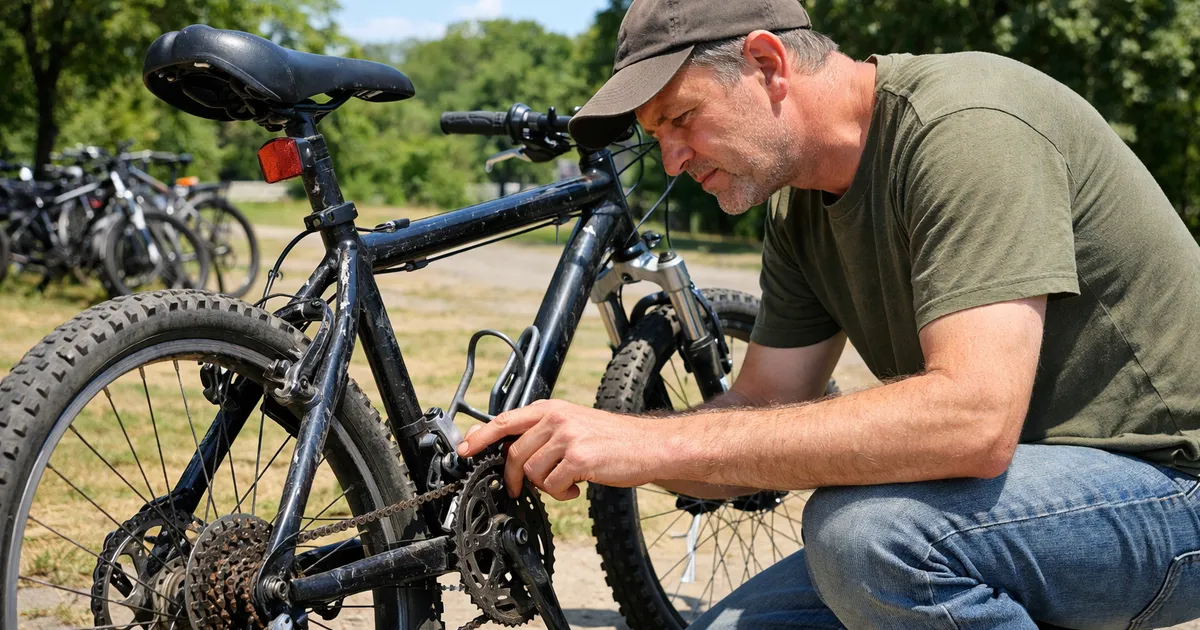
- Chain, chainrings, and cassette. If the teeth look like shark fins, they are badly worn. Pull the chain outward from the big chainring: if it lifts a lot, it is stretched and needs replacing. If it has been that way for a long time, it will have worn down the cassette and chainrings too.
- Brakes and pads. Check that the brakes stop the bike properly. If it has disc brakes, make sure the rotors are not warped. The pads should not be worn down to the limit.
- Wheels and tires. Spin the wheels and see if they run true. Look for broken or loose spokes. Check the tires: they should have tread and no cracks in the sidewalls.
- Fork and headset. Hold the brake and rock the bike forward and backward: if you feel knocking in the stem or headset, the headset is misadjusted or worn.
What to check by moving it with your hands before riding
Grab a crank arm and move it side to side: if there is play, the bottom bracket is worn. Turn the handlebar both ways: it should move smoothly, with no stiff spots. Loosen the seatpost clamp: if it will not move, it may be seized from corrosion. If it has suspension, compress it and make sure it rebounds smoothly with no oil leaks.
Also: hold the end of the fork with one hand and the frame with the other, and feel whether there is relative movement. If there is, the headset has play. Hold each wheel by the side and shake it laterally: even the slightest play in the hub points to worn bearings.
What to ask when buying a used bicycle, and how to read the answers
How long they have owned it, why they are selling it, what repairs they have made, whether it has had any hard impacts. If the answers are vague or do not add up, pay attention. Ask for the original purchase receipt if they have it.
Someone who has used their bike knows basic things about it. If they do not even know what model it is, be suspicious. If the seller pushes you to close the deal before you have checked everything, walk away: they are hiding something. Do not let someone else’s urgency dictate your decision.
What documents should you ask for before paying?
Before handing over any money, ask to see the seller’s ID and note down their details. If the bike has the original purchase receipt, ask for it on the spot. A simple bill of sale with the model, serial number, price, and date protects both sides and shows the purchase was made in good faith if a problem with the bike’s origin comes up later.
You do not have to remember all of this from memory. With AskPancho, you can inspect the bike step by step while it is right in front of you. Tell it what bike you are looking at and Pancho will guide you with questions tailored to that type of bicycle, ask for photos, and give you a full report. Make sure the cheap option does not end up costing you more.