
Used E-Bike Battery Guide: What You Need to Know
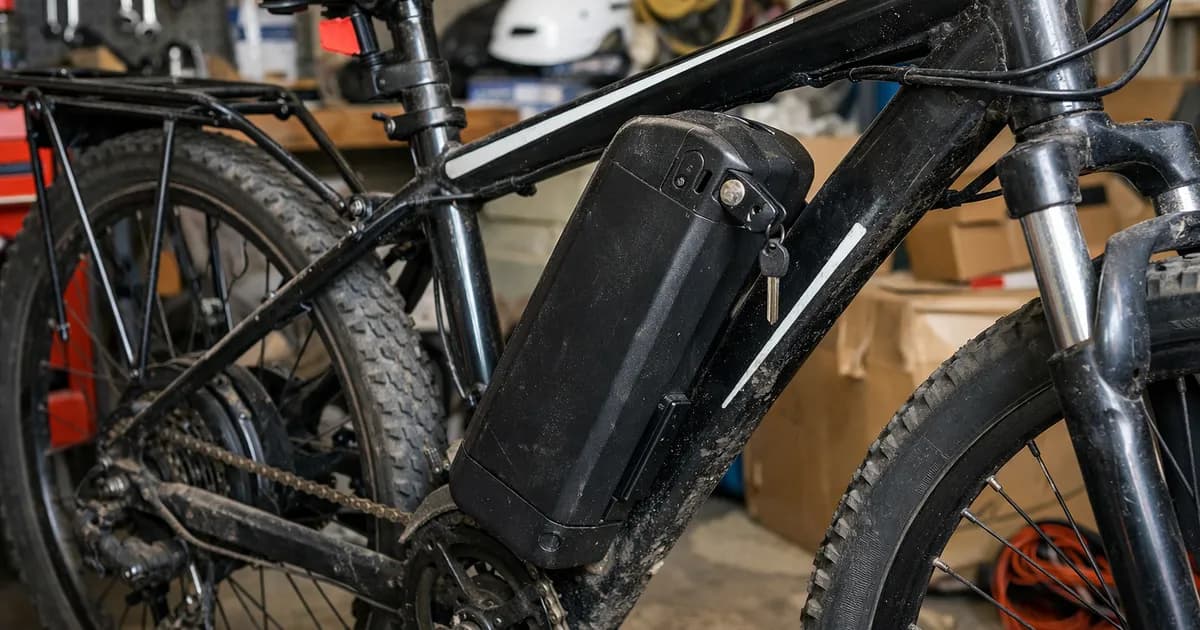
On a used e-bike, the battery is the most valuable component, the one that degrades the most, and the most expensive to replace. If you do not check it properly before buying, your cheap bike will stop being cheap very quickly. This guide tells you exactly what to ask, what to inspect, and what calculations to make before you pay.
How Fast Does a Used E-Bike Battery Degrade?
All lithium batteries lose capacity over time. No matter how well you care for them, each charging cycle wears them down a little. A battery with two or three years of use may have lost between 15% and 30% of its original capacity, depending on how it was used and stored. That means less range and, eventually, a replacement.
Wear is not linear. A battery that has been badly treated - always charged to 100%, stored empty, or exposed to heat - may have lost far more than 30% over the same period. One that has been well cared for may still retain 85% or more. That is why age alone is not enough: you need to know how it has been used.
What Should You Ask the Seller of a Used Electric Bike?
Before you go to see the bike, prepare these questions:
- How old is the battery? Not the bike, the battery - sometimes they are replaced. A battery more than three or four years old will usually have significant accumulated wear.
- How many charge cycles does it have? Some brands (Bosch, Shimano Steps, Brose, etc.) let you check the cycles on the display or in the app. After several hundred cycles, performance starts to drop noticeably, although it depends on quality.
- How has it been stored? A battery left discharged for months in a cold garage or in the sun will degrade faster. Ideally, it should be stored at 40-60% charge in a stable temperature.
- Is it the original battery or has it been replaced? If it has been replaced, ask which brand and model it is. A cheap generic battery can cause compatibility issues and, in the worst case, become a safety risk.
How Can You Check the Real Condition of the Battery Before Buying?
The ideal test is a range test: charge it to 100% and ride until it runs out. Compare the real range with the factory range. If the difference is large, the battery is worn out. You cannot always do this test before paying, but if you can, do it.
- Check the system diagnostics. Brands like Bosch have apps (eBike Flow) that show the battery health as a percentage. Ask the seller to open it in front of you.
- Watch the charging time. A heavily degraded battery charges faster than normal because it no longer has real capacity to store energy.
- Check the number of bars on the display. If the battery shows fewer bars than it should at 100% charge, there is degradation.
How Much Does It Cost to Replace a Used E-Bike Battery?
Replacing the battery is expensive. Depending on the brand and model, it can cost from several hundred to more than a thousand dollars. That can represent a very large part of the price you paid for the bike. Before you buy, find out how much a new battery costs for that exact model. Some batteries no longer have an official replacement available because the brand has discontinued the model.
If the battery on the bike is badly worn and the new one costs almost as much as the bike itself, the numbers do not add up. Subtract that cost from the asking price before negotiating.
What Else Should You Check in the Electrical System of a Used E-Bike?
Do not focus only on the battery. The motor and electronics are also expensive to repair.
- Motor: test the assist in all levels (Eco, Tour, Sport, Turbo, or equivalents). It should feel smooth and proportional. A motor that starts to fail may do so intermittently before breaking down completely.
- Display and controls: turn the display on and off, move through the menus, and check that the odometer and battery level respond properly. A display that does not turn on or shows errors points to a system problem.
- Charging: make sure the charger is included and that the bike charges without errors. Some systems show charging status in real time.
- Sensors: test the cadence or torque sensor. If the motor does not assist when pedaling, a sensor may be faulty.
When Does a Used E-Bike Stop Being a Good Buy?
There is a point at which the numbers no longer work. If the battery needs replacing and the cost of the replacement is more than 40% or 50% of the purchase price, the deal is no longer that attractive. Also, some brands discontinue models after only a few years and official spare parts disappear from the market, which can leave the bike stuck if the motor or battery fails.
Before deciding, ask explicitly whether the manufacturer still sells spare parts for that model. If the model is more than five or six years old, check the brand's user forums: that is usually where you will find up-to-date information about parts availability and the real cost of repairs, which often differs from official prices.
With AskPancho, you can inspect the bike thoroughly during the check. Pancho guides you step by step, tells you what to check in the electrical system and battery, and gives you a report so you can decide with real information. Don't let a cheap bike end up costing you dearly.