
What to Check on a Used Bike Before Buying It
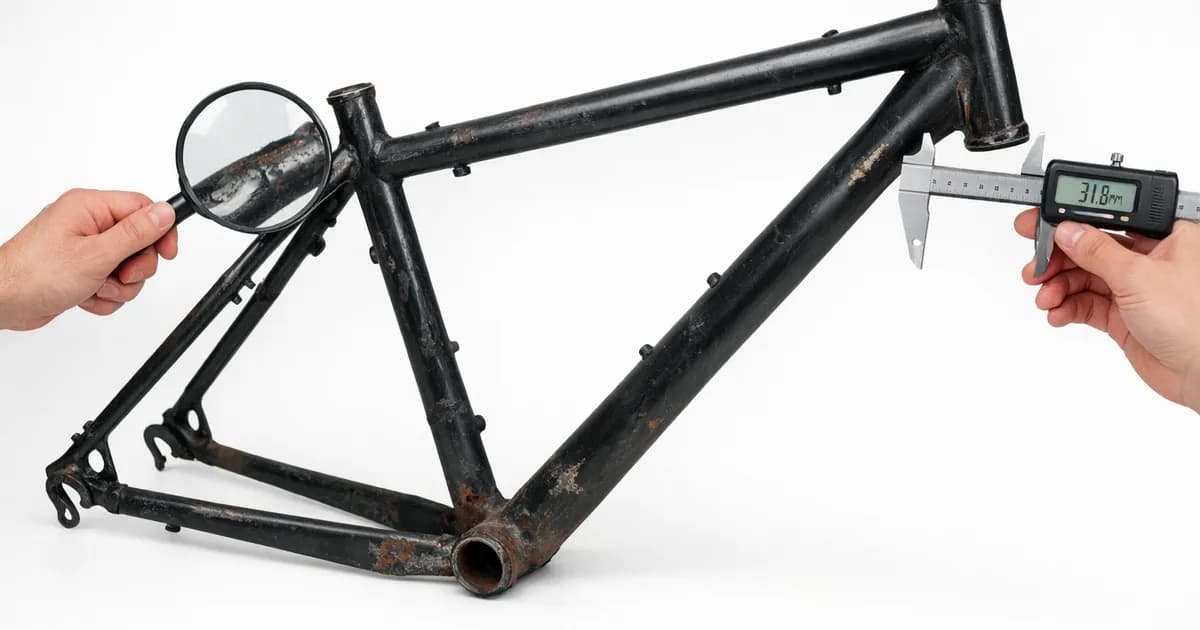
Checking a used bike is not as complicated as it sounds. There are key points that quickly tell you whether the bike has been well cared for or if it is likely to cause problems. You do not need to be a bike mechanic. You just need to know where to look and in what order.
How to tell if a bike frame has cracks or hidden damage
The frame is the most important part of the bike and the most expensive to repair or replace. Inspect it in good light, looking for cracks, dents, impacts, or rust spots. Pay special attention to the tube joints and the bottom bracket area, which take the most stress.
- Carbon frame: the inspection needs to be more careful. Carbon can have internal damage that is not visible from the outside. Look for splintering, irregular cracked paint, and impact marks. Run your hand over the tubes to feel for any uneven areas.
- Aluminum or steel frame: look for dents, bends, and rust. A steel frame with superficial rust is not a major issue, but if there are perforated or badly weakened areas, that is a structural problem.
- Welds: on any material, a rewelded weld that looks bubbly or different from the rest suggests the frame has been repaired. That does not automatically make it unsafe, but it does need an explanation.
What to check when buying a used bike: fork, headset, and suspension
The fork should be straight and show no signs of impacts. Turn the handlebars to both sides: the movement should be smooth, without tight spots or noises. If you feel a point where the steering locks up, the headset bearings are worn out.
- Rigid fork: check the lower part with your fingers, looking for side-to-side flex. A bent fork is not always obvious at first glance.
- Suspension fork: compress it several times. It should move smoothly, without noises, and return to its position. Look for oil leaks on the stanchions. A suspension fork that is not working properly is expensive to repair, and sometimes more expensive than the bike itself.
- Rear shock (on full-suspension bikes): compress it and listen. A shock with knocks, leaks, or rough return is worn out.
How to check if a used bike transmission is in good condition
The drivetrain (chain, chainrings, cassette, and gears) is the component that wears out the fastest in daily use. A worn drivetrain is not a deal-breaker if you are willing to replace it, but the cost should be reflected in the price.
- Chain: pull it outward from the big chainring. If it comes away a lot, it is stretched and needs replacing. If it has been like that for a long time, it will also have worn the cassette and chainrings.
- Chainrings and cassette: look at the teeth. If they have a shark-fin shape (pointy and curved to one side), they are heavily worn. With worn chainrings and cassette, a new chain will skip.
- Gears: shift through all the gears, up and down. The changes should be clean, with no skipping, no noise, and no chain drops. If the shifting is poor, it may just be worn cables, or it could be something more expensive, such as bent or incompatible derailleurs.
How to check the brakes, wheels, and tires on a second hand bicycle
Brakes are safety. Wheels are structure. Tires are the first thing that tells you whether the bike has seen a lot of use or very little. Inspect them with the same care as the frame.
- Disc brakes: squeeze the brake levers firmly. Braking should be progressive and powerful. Look at the rotors: if they are warped, braking will pulse or vibrate. Check the thickness of the brake pads.
- Rim brakes: the pads should not be dry or glazed. They should contact the rim evenly. Check the wear on the rim braking surface: if there is a deep groove, it is at the end of its life.
- Wheels: spin each wheel and see whether it runs straight or wobbles from side to side. Look for broken or loose spokes. A broken spoke weakens the entire wheel.
- Tires: they should have tread and no cracks on the sidewalls. Old, cracked tires have little grip even if they still look like they have tread.
What else should you check before buying a used bicycle?
The bottom bracket, seatpost, and serial number are three things many people overlook, and they can lead to unpleasant surprises.
- Bottom bracket: hold a crank arm and move it side to side. If there is play, the bearings are worn. Spin the pedals and listen: the movement should be smooth and quiet. Creaking or rubbing indicates a bottom bracket that needs attention.
- Seatpost: loosen the clamp and make sure it moves up and down without problems. If it is seized by corrosion, it can be very difficult to remove and, in the worst case, can compromise the frame. If you cannot adjust the saddle height, the bike is not suitable for you.
- Serial number: look for it on the underside of the frame, below the bottom bracket. If it has been filed down, erased, or is unreadable, do not buy that bike. A tampered serial number is the clearest sign that it may be stolen. If it is clearly readable, check it in stolen bike registries.
A test ride is essential. Many problems only show up while riding: shift through all the gears, brake hard, go over a bump, and listen for noises. It is not enough to sit on the bike and pedal twice. With AskPancho, you can check the bike step by step while you have it in front of you, without needing to be an expert. Cheap should not end up expensive.