
Used Carbon Bike: Is the Risk Worth It?
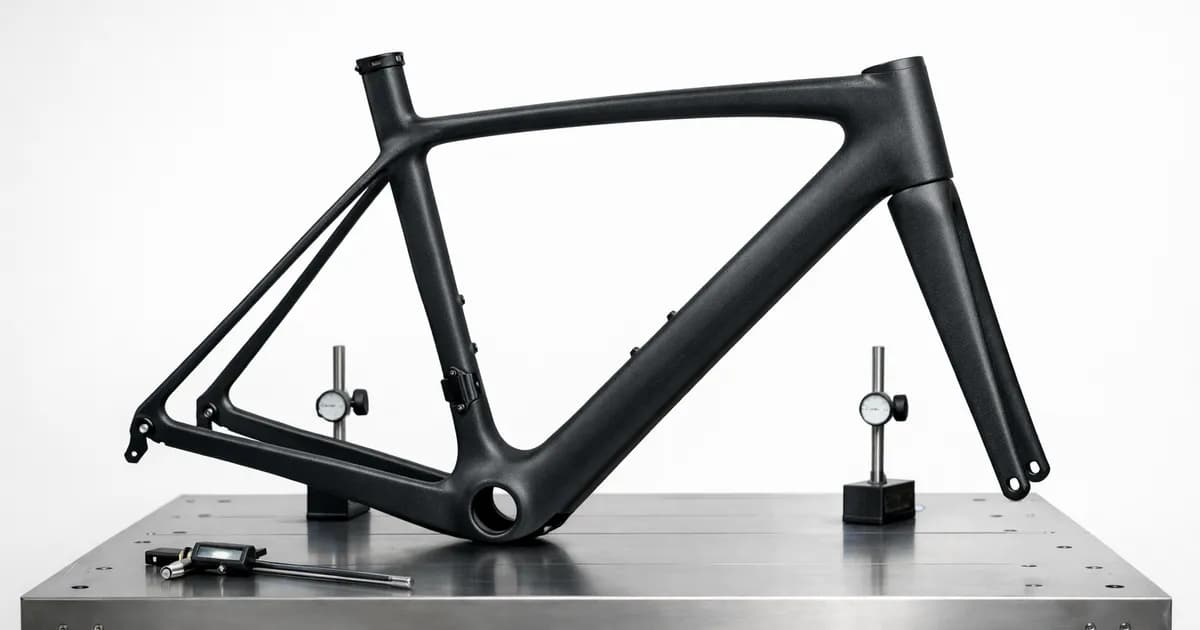
Used carbon bikes are tempting. Lightweight frames, high-end components, and a fraction of the price of new ones. But carbon has a problem that other materials do not: it can be damaged from the inside without showing it on the outside. This guide tells you what to look for, what to ask, and when it is worth taking the risk.
Why does a used carbon bike have a specific risk that other materials do not?
Aluminum dents. Steel bends. Both warn you when they take a hit: the deformation is visible. Carbon does not always do that. A hard impact can create internal microcracks that are not visible at first glance but weaken the frame structure. And a weakened frame can fail while you are riding, without warning.
Carbon is also sensitive to prolonged heat, galvanic corrosion at joints with metal parts, and poorly tightened clamp systems. A frame that has been subjected for years to a power meter or clamp without the correct torque can have hidden damage in the joint area that is not visible.
What can you check yourself when inspecting a carbon frame?
Inspect the frame in good light. Look for cracks, splintering, impact marks, or areas where the paint is lifting or cracking unevenly. Pay special attention to:
- The tube junctions (where the top tube meets the head tube and the seat tube).
- The bottom bracket area, where the frame takes the most stress.
- The rear stays and the area around the dropout.
- The down tube, which usually takes the most hits in crashes.
Run your hand over the frame to feel for irregularities that you cannot see. You can also lightly tap along the tubes with a coin. A solid, even sound is a good sign. If any area sounds duller or hollow, there may be internal damage.
What damage in a carbon frame is invisible to the buyer?
Internal microcracks cannot be detected with a visual inspection. For that, you need methods such as an ultrasound scan, which some specialized shops offer. It is not cheap, but if you are buying an expensive carbon frame, it may be worth it as a safety investment.
There can also be galvanic corrosion damage that you will not see unless you remove the components. If the frame has untreated steel hardware in direct contact with carbon, corrosion may be forming at the joint.
What should you ask the seller of a used carbon bike?
Ask the seller whether the bike has crashed, taken any hard hits, or been involved in an accident. Also ask:
- Whether it has been transported often by car (carbon frames are sensitive to transport damage if they are not properly protected).
- Whether the fork and seatpost are also carbon or made from another material.
- Whether any parts have been replaced and why.
- How old the frame is and whether there is an original purchase invoice.
If the seller does not want to talk about the bike's history, that already tells you something. A seller who has taken care of their bike knows perfectly well whether it has had any major impacts.
Do the carbon fork and seatpost deserve the same attention as the frame?
Yes, and they are often overlooked. A damaged carbon fork is as serious a safety problem as a compromised frame, perhaps even more so, because it handles direct braking loads. Inspect the fork tubes using the same method as the frame: good light, hand-feel, and the coin test. Pay special attention to the junction with the crown and the lower end where the axle stops are located.
The carbon seatpost can have microcracks in the area where the clamp is tightened if the maximum torque specified on the seatpost has ever been exceeded. Many sellers do not know that tightening torque matters, and many shops do not check it. If the seatpost does not have the recommended torque markings engraved on it, or if the seller does not know what they are, inspect it very carefully.
When is a used carbon frame not worth buying?
There are situations where the risk clearly outweighs the potential savings:
- If the frame is more than eight or ten years old. Carbon does not wear out just because of age, but an older frame has accumulated fatigue cycles, and the risk of hidden damage increases.
- If the seller does not know whether it has crashed or not. Someone not remembering whether their bike has fallen over is not reassuring when it comes to a carbon frame.
- If the price is so low that it does not make sense. A high-end carbon frame sold for the price of a cheap aluminum one has a reason behind it. If you cannot see it, be concerned.
- If there is any visible crack, no matter how small. In carbon, there is no acceptable crack. Any crack you can see is the outer limit of damage that likely extends further inside.
With AskPancho you can inspect the bike thoroughly during the inspection. Pancho knows which points are critical on a carbon frame, guides you through checking the most vulnerable areas, and asks for photos to analyze them. That way, you make your decision with information, not hope. Don't let a cheap bike end up costing you more.