
What to Check on a Used Car Before the State Vehicle Inspection
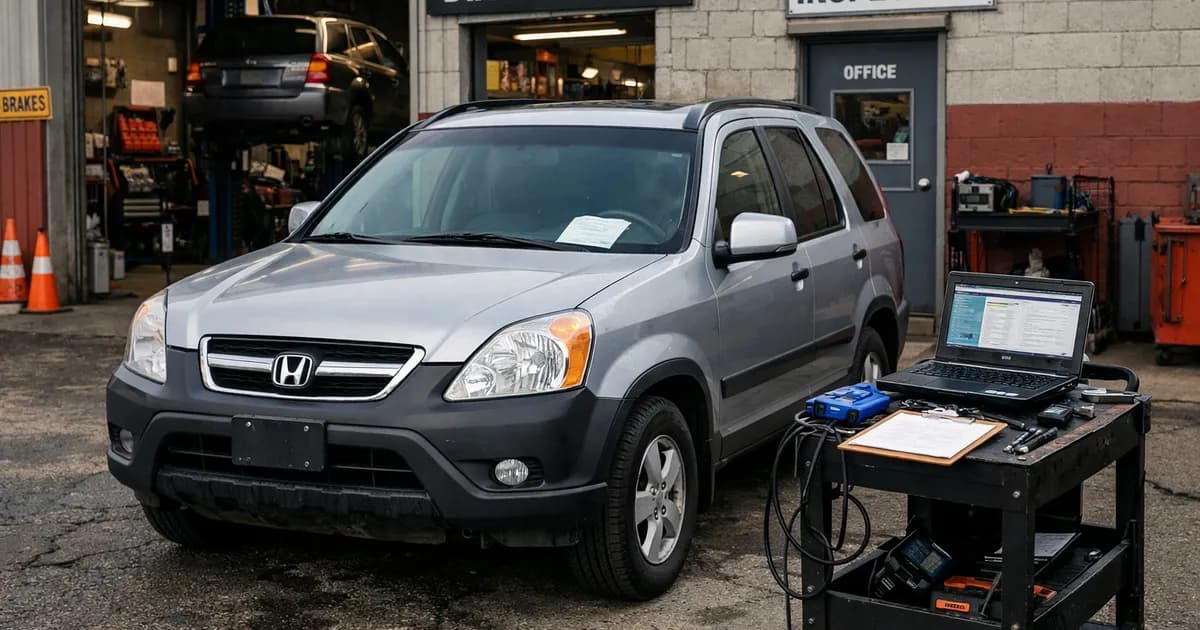
You’ve just bought a used car and its State Vehicle Inspection is coming up soon. Or worse: you bought it with an expired inspection sticker and now it’s on you to get it through. It’s not the end of the world, but it pays to be prepared. The most common reasons for failing are things you can check or fix yourself in less than an hour. And for the ones you can’t, a workshop can sort them out for far less than the cost of a retest.
What can I check myself before taking the car to the State Vehicle Inspection?
Most inspection failures come from simple issues that anyone can check without special tools. Before paying the fee, spend half an hour going through these points:
- Lights: make sure all of them work without exception: low beams, high beams, parking lights, turn signals, reverse lights, license plate lights, and brake lights. This is the most common reason for failing and the cheapest to fix. A blown bulb can be replaced in minutes and usually costs between 2 and 10 euros.
- Tires: check tread depth with a coin or a tread gauge. The legal minimum is 1.6 mm. Also look for cuts, bulges, or uneven wear. And make sure the tire size matches the one listed on the car’s registration document.
- Exhaust system: if it has holes, is rusty, or sounds louder than normal, it will probably fail. Look underneath the car for hanging, loose, or visibly rusted parts. A faulty exhaust can also affect emissions.
- Brakes: check the thickness of the brake pads and the condition of the rotors. If the pads are very thin (less than 3 mm of friction material) or the rotors have a pronounced lip, cracks, or are warped, replace them before you go. Also test the parking brake: if the car moves with the parking brake engaged, it needs adjustment or repair.
- Windshield wipers: torn, worn, or ineffective wiper blades are a failure item. Also check that the washer system works and has fluid.
- Mirrors and glass: a broken mirror or a windshield crack in the driver’s line of sight is an automatic fail. If you have a small crack outside the field of vision, it may pass, but it’s better to repair it first.
You can do all of this at home with good lighting in less than half an hour. If something isn’t right, fix it before booking the inspection. Workshops usually have same-day availability for simple repairs like bulb or wiper replacements.
Which State Vehicle Inspection points need a workshop check?
Some inspection tests require specialized equipment and can’t be done at home. These are the ones that worry people most, because if they fail, the repair can be expensive.
- Emissions: this is one of the main tests. If the car is smoking excessively, the oxygen sensor isn’t working properly, or the catalytic converter is in poor condition, it won’t pass. A workshop can carry out a pre-check with an OBD scanner to see whether the values are within limits. This diagnosis usually costs between 30 and 60 euros and can save you an unpleasant surprise at the inspection station.
- Steering and suspension: if you notice play in the steering wheel, the car pulls to one side, or the shocks are worn out (the car bounces too much after a speed bump), have a mechanic inspect it. The inspection measures shock absorber efficiency with special equipment, and worn shocks are not only a reason to fail, they’re also a real road safety risk. Before buying, make sure to verify the condition of a car to avoid costly surprises.
- Brake system: in addition to pads and rotors, the inspection checks braking efficiency with a device called a brake tester. It measures the braking force of each wheel and compares whether they are balanced. If the brakes are uneven (one wheel brakes much harder than the wheel on the same axle) or don’t have enough force, the car will fail. Bleeding the brake system and making an adjustment can solve the problem for relatively little money.
- Steering play: ball joints, bushings, and tie rods wear out over time. If there is play, the car can behave unpredictably, and the inspection will detect it during the alignment test. A mechanic can identify the worn part and replace it before the inspection.
For these four points, the best option is a pre-inspection at a workshop. Many workshops offer this service for between 30 and 80 euros and provide a detailed report of what needs fixing before you show up at the inspection station.
What documents do I need to pass the State Vehicle Inspection with a used car?
Paperwork is something many people forget, and it can waste your trip. Before you go, make sure you have:
- Registration document: the document that lists the vehicle’s specifications (also called the inspection certificate).
- Vehicle registration: the document that identifies the vehicle and authorizes it to be driven on public roads.
- Valid insurance: if the insurance has expired, they won’t accept the inspection.
- Proof of road tax: some states require it, others do not. Bring it just in case.
If the car has had any modifications (tow hitch, engine swap, wheels different from the original ones, tinted windows), check that they are listed in the registration document with the corresponding approval. If they are not recorded, the inspection may reject the car and you’ll have to complete the approval process before you can pass. If you’re buying from a private seller or a dealer, take a look at the differences before making your decision.
It’s also a good idea to check whether the title transfer has already been processed at the DMV. If the vehicle is still in the seller’s name and there is an unpaid ticket or lien, you may not be able to complete the transfer until that issue is resolved first.
Is a pre-inspection at a workshop worth it before the official inspection?
Yes, almost always. A pre-inspection at a workshop costs between 30 and 80 euros, and they tell you exactly what needs fixing to pass. It is much cheaper than going to the inspection blind, failing, fixing the issues, and paying the fee again, which varies depending on the station and state.
A pre-inspection is especially useful when:
- You’ve just bought the car and don’t know its maintenance history in detail.
- The car has high mileage and you suspect it may have steering play, emissions issues, or worn brakes.
- It has been sitting for a long time and you don’t know the condition of the fluids, rubber parts, and seals.
A pre-inspection also has another benefit many people don’t consider: if the workshop is linked to an inspection station, it can sometimes handle the official inspection directly once the defects are fixed. That saves time and hassle.
With AskPancho, you can inspect the car yourself before taking it to the workshop. Pancho guides you step by step so nothing gets overlooked, and you arrive at the workshop knowing what to ask for and what to have checked. To do it right, follow the steps for a good used car inspection.