
The Most Expensive Common Used Car Problems — and How to Spot Them Early
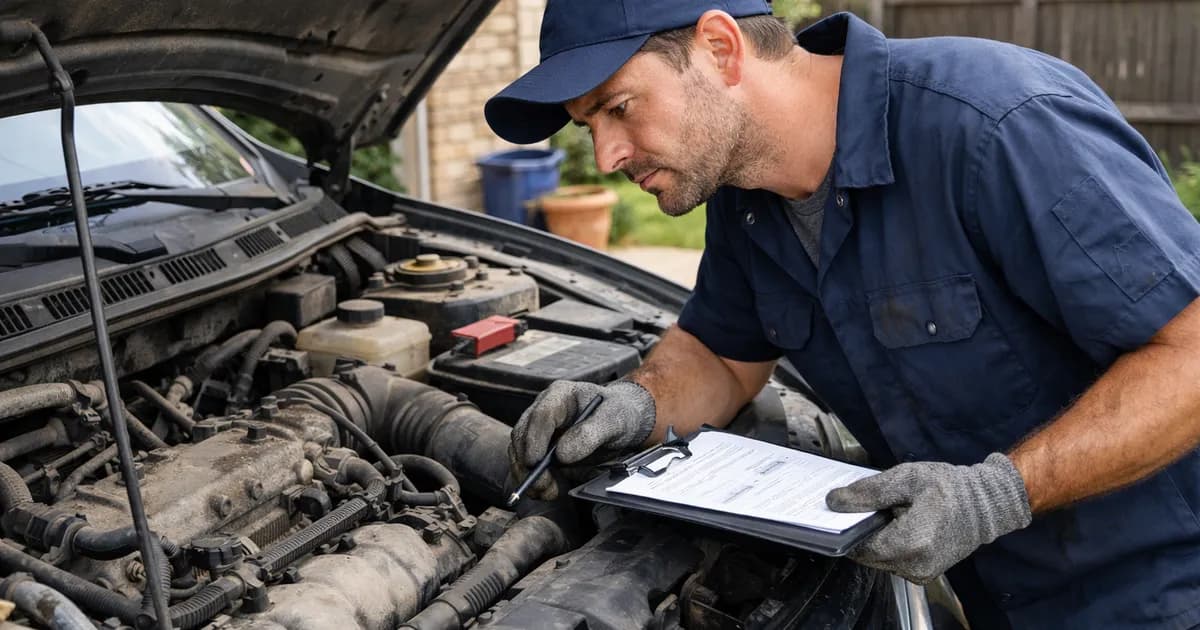
Some repairs cost $200, while others cost $3,000. The difference is often just catching them in time. If you are about to buy a used car, knowing the most expensive faults and their early warning signs can save you a huge headache. You do not need to be a mechanic: you just need to know what to look at, what to listen for, and what to ask.
What happens if the timing belt breaks in a used car?
If the timing belt breaks while the engine is running, the pistons hit the valves and the engine is destroyed. It is one of the most feared repairs because it can turn a car into scrap in a matter of seconds.
Replacing it on time costs between $300 and $800, depending on the model. Repairing it after a break can exceed $3,000, if the engine can even be saved. The worst part is that it usually gives no clear warning that it is about to fail. That is why it is essential to:
- Always ask for the invoice for the last replacement. If you do not have it, assume it needs to be done.
- Check the manufacturer’s interval: usually between 60,000 and 120,000 miles or between 5 and 10 years, whichever comes first.
- Include the cost in your calculation: if the timing belt service has not been done, add it to the car’s price before deciding whether it is a good deal.
How do I know if the dual-mass flywheel is failing?
The dual-mass flywheel is a part that absorbs engine vibrations and smooths the transfer of power to the clutch. When it wears out, you will notice strong vibrations at idle, especially with the car in neutral and your foot on the brake. It can also produce a sharp metallic noise, like rattling, when starting the engine or switching it off.
Replacing it costs between $800 and $1,500, because the transmission has to be removed to reach it. Many shops recommend replacing it together with the clutch to avoid paying labor twice, which can push the bill above $2,000. If during the test drive you notice strange vibrations at idle or rattling when starting cold, ask the seller directly.
How do I spot a bad turbo before buying a diesel?
If the car is a turbo diesel and it blows blue or gray smoke when you accelerate, the turbo may be damaged. A new or rebuilt turbo, including labor, can cost between $1,000 and $2,500. It is an expensive repair because the turbo works at extreme temperatures and speeds, and when it fails, it often takes other components with it.
Early signs to watch for:
- Metallic whistling: a high-pitched sound that was not there before, especially when accelerating between 2,000 and 3,000 rpm.
- Loss of power: the car does not respond as it should when you press the accelerator, as if it had no pull.
- Excessive oil consumption: if the turbo has a leak, it burns oil, which leads to smoke and a rapidly dropping oil level.
Before buying a diesel with a turbo, accelerate hard during the test drive and look at the exhaust smoke. If blue smoke comes out, the turbo is burning oil.
What problems does a clogged catalytic converter cause, and how much does it cost to replace it?
The catalytic converter cleans the exhaust gases before they are released into the air. Over time, it can become clogged, especially in cars that only do short city trips, because they do not reach the temperature needed for the converter to work properly.
When it fails, the car loses power, uses more fuel, and will not pass a State Vehicle Inspection for emissions. Replacing it can cost between $500 and $1,500 depending on the model. A bad catalytic converter can sometimes be identified by a rotten egg smell from the exhaust, or because the car bogs down during hard acceleration.
If the car you are looking at has done a lot of city driving or has more than 150,000 miles, ask the seller whether the catalytic converter has been inspected or replaced.
How do I know if a used car’s transmission has problems?
Repairing or replacing a manual transmission can cost between $1,000 and $2,500. An automatic is significantly more: it is not uncommon to reach $3,000 or $4,000. It is one of the most expensive repairs, and also one of the easiest to detect during a test drive.
Warning signs:
- Noises when shifting gears: crunching, grinding, or knocking sounds when changing gears.
- Difficulty engaging gears: if a gear goes in with resistance or has to be forced.
- Vibrations: especially during acceleration or at steady speeds.
- Gears popping out: if the shifter slips back into neutral without you touching it.
During the test drive, try every gear, including reverse. If it is automatic, pay attention to jerks when it shifts and delays in response.
What are the signs of a blown head gasket in a car?
When the head gasket fails, coolant mixes with engine oil. The consequences are serious: if it is not detected in time, it can cause irreversible engine damage. The repair costs between $800 and $2,000.
The clearest signs are:
- Thick white smoke from the exhaust: do not confuse it with normal vapor on cold days. Smoke from a blown gasket is dense, persistent, and has a sweet smell.
- Milky-looking oil: if you open the oil filler cap and see a mayonnaise-like substance, the fluids are mixing.
- Coolant loss without visible leaks: the level drops, but you do not see puddles under the car.
- Engine running too hot: the temperature gauge rises more than normal, especially in city driving.
Check the oil filler cap with the engine cold. If you see milky residue, do not buy that car.
Why can fuel injectors be so expensive in a high mileage used car?
Fuel injectors are responsible for metering fuel into the cylinders with millimeter-level precision. In modern diesel engines (common rail), they work under extremely high pressure and are high-tech components.
Replacing a single injector can cost between $300 and $600, and a car has four or more. If all of them need to be replaced, the bill can easily exceed $2,000.
Signs of bad injectors:
- Rough idle: the engine shakes or runs unevenly at idle.
- Jerking during acceleration: the car does not accelerate smoothly but in bursts.
- Loss of power: especially when going uphill or overtaking.
- Excessive fuel consumption: if the car uses far more fuel than it should, the injectors may be metering incorrectly.
How can I protect myself from expensive repairs when buying a used car?
The best protection is a proper inspection before you buy. Knowing these repairs and their warning signs gives you a huge advantage over a buyer who only looks at the price and color. By checking a car’s condition before buying it, you can get ahead of these problems.
With AskPancho, you can inspect the car step by step and detect early warning signs of these faults. Pancho tells you what to look at, how to do a proper inspection, what to listen for, and what to ask based on the exact model you are considering. Prevention is cheaper than repair. Do not let a low price cost you money because you rushed.