
Steps to buy a house in Spain as a foreigner, from NIE to notary
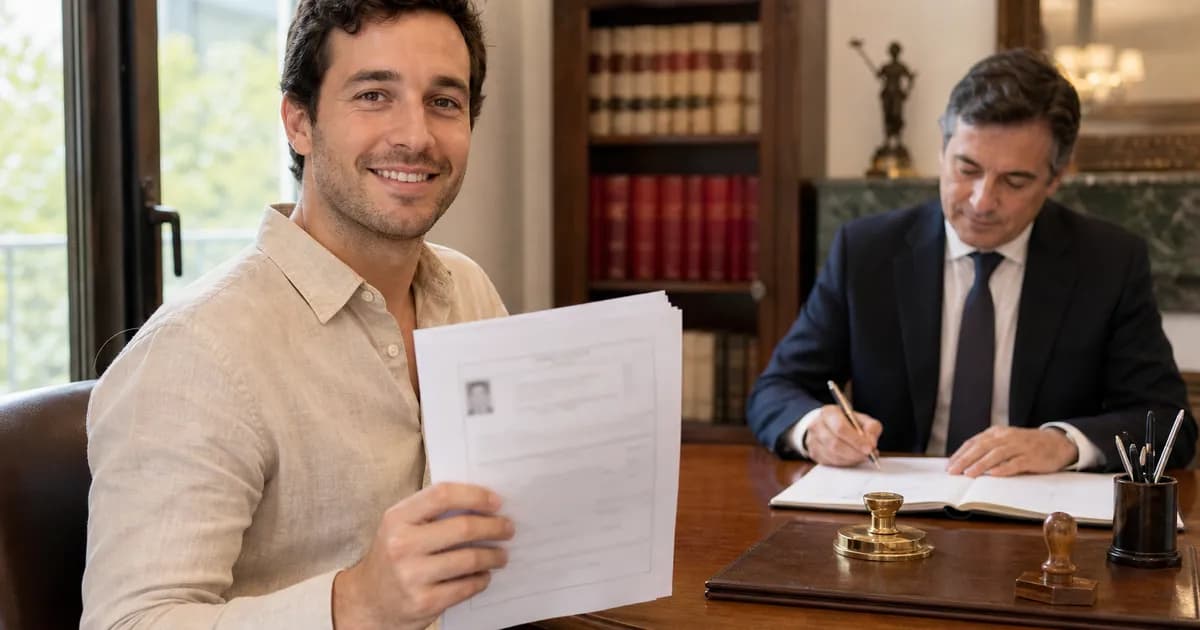
Buying a resale home in Spain as a foreigner runs in a set order: get an NIE, sort out the money (a Spanish bank account and, if needed, a mortgage), find and check the property, sign a reservation or arras contract, sign the deed before a notary, pay the regional transfer tax on time and register the deed. Only some of those steps have legal deadlines.
What are the steps to buy a house in Spain, and how long does each take?
The main steps are the NIE, money, checks, arras, deed, transfer tax and registration. In Spain the police must resolve an NIE application within five days, the lender must hand you the mortgage papers at least ten calendar days before signing, and the community's debt certificate must be issued within seven calendar days of the request.
| Step | Who you deal with | What you come away with | Time limit or official estimate |
|---|---|---|---|
| NIE | Policía Nacional in Spain, or a Spanish consulate abroad | NIE, sent by email from UK consulates | In Spain, 5 days from registration of the application. London consulate: 3 weeks; Edinburgh: 3 to 4 weeks; both can take longer |
| Proof of non-residence for a bank | Policía Nacional | Certificado de no residente, valid 3 months | 5 days |
| Mortgage offer | The lender, then a notary you choose | FEIN, FiAE, draft contract; notary's acta | Documents at least 10 calendar days before signing; notary meeting by the day before |
| Land registry extract | Colegio de Registradores, online | Nota simple | Official average under 2 hours (not a legal limit) |
| Community debts | The community's secretary | Certificate of debts | 7 calendar days from the request |
| Registry check before signing | The registrar, at the notary's request | Note on owner, description and charges | 3 business days (5 if complex), then alerts of new filings for 9 calendar days |
| Deed | Notary | Escritura pública de compraventa | Sent to the Land Registry the same or next business day; copies within 5 business days |
| Transfer tax (ITP) | Regional tax agency | Paid Modelo 600 | 1 month, 2 months or 30 business days in the seven regions listed below |
| Plusvalía notice | Town hall | Declaration or notice of the sale | 30 business days |
| Registration | Land Registry | Entry in your name | 15 business days from the presentation entry |
Source: Policía Nacional, consulates in London and Edinburgh, Law 5/2019, Colegio de Registradores (and its page on registration), Horizontal Property Act, Mortgage Regulation, Notarial Regulation, Local Finance Act, Mortgage Act.
How do you get an NIE to buy property in Spain?
The NIE (número de identidad de extranjero, foreigner identity number) is how Spain identifies you for tax purposes, and the purchase cannot go through without it. Everyone signing a property deed must show the notary their tax identification number, and for a foreign individual that number is the NIE. Apply as soon as you start viewing.
You can apply in Spain, to the Policía Nacional through an Oficina de Extranjería (immigration office) or a police station, or through the Spanish consulate where you live. You need form EX-15, fee form 790 code 012 and a stated economic, professional or social reason. In Spain the fee is €9.84, payable at a bank where you need no account. The police must resolve within five days of registering the application; silence means refusal.
At the London and Edinburgh consulates the fee is £8.65 in 2026, paid by card at an appointment requested by email. Bring your passport, a copy of its photo page, proof that you live in the consulate's area and proof of why you need the number. London quotes three weeks and Edinburgh three to four, both warning it can take longer; the NIE arrives by email. A representative can apply for you, and in London needs an apostilled power of attorney expressly covering the NIE.
The NIE is not a residence permit. A consulate-issued NIE identifies you to Spanish administrations but does not entitle you to live in Spain or prove residence there.
Do you need a Spanish bank account to buy a house in Spain?
You will want a Spanish bank account for the running costs: after completion the IBI, community fees and utility bills need paying. At the deed the notary records how the price was paid, including the codes of the accounts debited and credited for a transfer. Opening an account as a non-resident also means proving that status.
According to the Banco de España, the bank will ask for identification (for an EU citizen, passport or national ID with the NIE) and, if you are not resident, documents proving it. It may also ask where your money comes from, then or later, and block the funds if you cannot justify it.
For that proof, the Policía Nacional issues a certificado de no residente (non-resident certificate) on the same EX-15 form, also through consulates. It is resolved within five days and is valid for three months, so time it close to the bank appointment. If you live legally in the EU, banks offering payment accounts must also offer you a basic one (cuenta de pago básica) under Royal Decree-law 19/2017; living in the UK does not qualify.
Can a non-resident get a mortgage in Spain?
Spain's mortgage law, Law 5/2019, covers loans that professional lenders make to individuals secured on residential property, and its scope says nothing about where the borrower lives. Whether a bank lends to you is the bank's decision, and outside what we advise on. What the law does give you is a paper trail with minimum waiting times.
- Valuation (tasación): an approved valuer independent of the lender values the property before the loan, at your cost.
- Offer: at least ten calendar days before signing, the lender must hand you the FEIN (European Standardised Information Sheet), a binding offer until signing for at least ten days; the FiAE warnings sheet; and the draft contract with every cost broken down.
- Notary: in that period you appear before a notary you choose, who advises you personally and free of charge and records it in an acta, by the day before signing at the latest. Without it, the mortgage deed cannot be signed.
- Costs: the lender pays the notary for the mortgage deed and the registration of the mortgage; copies are paid by whoever asks for them.
Tax on the mortgage deed is in our guide to buying costs in Spain for foreigners. If you earn in pounds and would borrow in euros, talk to an independent financial adviser about exchange-rate risk before you accept the FEIN.
How do you find and view a property when you live abroad?
Search Spanish portals and agencies as you would at home, but read listings like a Spanish buyer. Anyone advertising a home for sale, whether an agency, a portal or a private seller, must include its energy efficiency rating. Plan the viewing trip around documents too.
Before you fly, ask for the land registry extract, the energy certificate and the last IBI receipt, so the visit can confirm what the papers say. Our guide to checking a resale flat in Spain on a short trip covers what to inspect and film. If the building is old or something looks wrong, read do you need a survey to buy a property in Spain before you make an offer.
What should you check before you pay a deposit?
Before paying any deposit, check the title, the debts that travel with the property and the papers the seller has to hand over. Some debts follow the property as well as the seller: unpaid community charges and IBI can end up being recovered from the home you bought. Four documents cover the basics; professionals cover the rest.
The nota simple
The nota simple (land registry extract) identifies the property, its registered owners and the rights and charges on it, such as a mortgage. You can order it online from the Colegio de Registradores for €9.02 plus VAT, with an average turnaround under two hours and an English translation on request. It is for information only. How to read it is in our guide to the nota simple.
The certificate of community debts
Under the Horizontal Property Act, the flat itself is legally tied to what previous owners owe the community for general expenses for the part of the current year already due and the three previous calendar years: you answer for those debts with the flat, not personally. So the seller must bring a certificate of debts to the notary, who cannot authorise the deed without it unless you expressly waive it. Do not waive it. The secretary issues it, with the president's approval, within seven calendar days of the request. More in our guide to community fees, derramas and the certificate of debts.
IBI and the cadastral reference
The property is also tied to unpaid IBI (Impuesto sobre Bienes Inmuebles, the yearly local property tax), but only on a subsidiary basis: it can be recovered from the property if the seller does not pay. Under the Local Finance Act the notary must ask about IBI debts and warn you in the deed. The last IBI receipt is one of the documents the Cadastre Act accepts as proof of the cadastral reference, which the parties must give the notary; you can also search the Sede Electrónica del Catastro. On Registry versus reality, see illegal extensions and closed-in terraces.
The energy certificate
When an existing home is sold, a copy of the registered energy performance certificate and its label is attached to the sale contract, under Royal Decree 390/2021. Ask for it before the arras.
If you are not an EU national: restricted defence zones
Under Law 8/1975, in zones declared of restricted access to property by foreigners, a foreign buyer needs military authorisation, and notaries and registrars must see it before signing or registering. EU nationals are exempt, so the rule can reach British, American and other non-EU buyers. Zones of national tourist interest count as authorised. Ask your lawyer to check early.
What is the difference between a reservation and an arras contract?
A reservation agreement (contrato de reserva) and an arras contract (contrato de arras) both take the property off the market in exchange for money, and both can cost you that money. The Civil Code has a specific rule for arras; a reservation agreement is governed by its own wording, so read it just as carefully.
Article 1454 of the Civil Code lets the buyer withdraw by losing the arras and the seller by returning them doubled, but only if the contract clearly makes them penitential arras (arras penitenciales); otherwise the Supreme Court treats the money as a payment on account of the price that confirms the sale, and neither side can simply walk away. Under article 1091, contractual obligations have the force of law between the parties. So write your conditions in before you sign either document: a nota simple showing the owner and charges you were told about, a clean community certificate and, if you need one, mortgage approval. Who holds the money and the types of arras are in the arras contract in Spain.
Pay deposits by bank transfer and keep the receipts. At the deed you declare payments already made, with the accounts debited and credited, and the notary records them.
What happens at the notary when you sign the deed?
The notary (notario) is a public official who authenticates the deed and must advise both parties impartially, which is not the same as acting for you. On the day, the notary checks identities, tax numbers, the registry position, the community certificate and how you pay. Unless the deed says otherwise, signing it counts as delivering the property.
Who chooses the notary
Under the Notarial Regulation, if the seller sells property as a regular business or on standard terms, the buyer chooses, and in contracts with a bank, such as your mortgage, the bank's customer chooses, provided the notary has a reasonable connection with the deal. Otherwise any specific rules apply first, then whatever the parties agree; failing that, whoever pays the larger share of the notary's fees chooses. The Civil Code puts the cost of executing the deed on the seller and the first copy and later costs on the buyer, unless you agree otherwise.
Before the day
The notary asks the Land Registry for the current description, owner and charges. Under the Mortgage Regulation, the registrar replies within three business days (five in complex cases) and, for the next nine calendar days, tells the notary the same day if another document affecting the property is filed. That is your protection against a last-minute charge.
Language
If you do not understand Spanish, the notary can translate the deed to you orally if they know your language, or draw it up in two columns, Spanish and yours, if you ask. Otherwise an interpreter you appoint translates and signs the deed too.
Paying the price
The deed must identify how the price was paid: cash declared by the parties, a copy of any cheque, and the account codes for transfers. If the parties refuse, the Mortgage Act blocks registration until it is put right, one more reason not to accept a seller's request to declare a lower price. Outside the Basque Country and Navarre, if the seller is not resident in Spain, you must withhold 3% of the agreed price and pay it to the tax office on account of the seller's tax, under the Non-Residents Income Tax Act; the details are in buying from a non-resident seller in Spain.
After you sign
Unless you ask otherwise, the notary must send an electronic copy to the Land Registry on the day of signing or the next business day, and issue copies within five business days.
Can you buy property in Spain without travelling to sign?
A power of attorney (poder notarial) lets someone you choose, such as your Spanish lawyer, sign the arras, the deed and a mortgage for you, so you need not travel. From the UK there are two routes: a Spanish consulate, or a UK notary plus an apostille. The Spanish notary judges whether the power is sufficient.
The consulate in London grants general powers, which can cover buying, mortgaging and opening bank accounts, and special ones for specific acts such as a purchase. It asks for your passport, your NIE, your representative's DNI or NIE and a description of the powers. You appear in person to sign, and you can revoke the power at any time.
The other route: a UK notary or solicitor certifies the power and the UK government's Legalisation Office adds an apostille. On gov.uk, the paper service costs £45 per document plus courier or postage and takes, in gov.uk's words, "Usually up to 25 working days, plus courier or postage time"; an e-Apostille costs £35 and takes up to two working days. Apostilled documents can be presented directly in Spain. Within the EU, Regulation 2016/1191 removes the apostille in certain cases.
For the Land Registry, a document not in Spanish can be translated by the Oficina de Interpretación de Lenguas, by officials authorised under laws or treaties, or by a notary. Either way, send the draft to the Spanish notary who will sign the deed before you sign it at home: under Law 24/2001, that notary must state in the deed that the powers are sufficient for the sale.
When do you pay the transfer tax on a resale home in Spain?
You pay the transfer tax within a deadline set by the region where the property is. The Impuesto sobre Transmisiones Patrimoniales (ITP) on a resale home goes to that region, the buyer pays it whatever the contract says, and the clock starts when you sign the deed. The Land Registry will not register your purchase until it is paid.
| Region | Deadline to file and pay | Counted from |
|---|---|---|
| Andalusia | 2 months | The day after the deed |
| Balearic Islands | 1 month | The day of the deed |
| Canary Islands | 1 month | The day of the deed |
| Catalonia | 1 month | The date of the deed |
| Madrid | 30 business days | The date of the deed |
| Murcia | 30 business days | The date of the deed |
| Valencian Community | 1 month | The day of the deed |
Source: Agencia Tributaria de Andalucía, Agència Tributària de les Illes Balears, Agencia Tributaria Canaria, Agència Tributària de Catalunya, Comunidad de Madrid, Región de Murcia, Agència Tributària Valenciana.
The region is fixed by where the property is, under Law 22/2009, not where you live; rates are in the buying costs guide linked above. You can file yourself or through a professional; online filing needs Cl@ve in the Balearics and a digital certificate in the Valencian Community.
The town hall's capital gains tax
Where the town hall levies it, a sale also triggers the plusvalía municipal, the town hall's tax on the increase in land value. Under the State's Local Finance Act, the seller is the taxpayer, but if the seller is an individual not resident in Spain, you pay it as substitute taxpayer. Even when the seller pays, the buyer must notify the town hall of the sale within 30 business days. The Land Registry will not register your deed without proof that the plusvalía has been declared or notified.
How long does it take to register the property in your name?
The registrar has a maximum of fifteen business days from the presentation entry to register the deed, and the count restarts if the deed has to be corrected. Registration is what makes your purchase hold against everyone else: under the Mortgage Act, titles not registered in the Land Registry do not prejudice third parties.
The Registry will not register a deed until you prove the taxes on it are paid, the plusvalía has been declared or notified and every party's tax number appears in it. If the registrar finds a defect, they refuse with reasons, notify the presenter and the notary, and extend the presentation entry for sixty days from the last notification so a fixable defect can be corrected.
What do you need to do after buying a house in Spain?
Completion leaves a short list of jobs. File the transfer tax and the town hall notice within their deadlines if your lawyer has not, then move the utilities, the IBI and the community records into your name. If you will live in Spain, register at the town hall.
- Utilities: ask the seller for recent electricity, water and gas bills and change the contracts into your name.
- Community: give the secretary an address in Spain for notices, with proof of receipt. Otherwise the law treats the flat as your address, and notices handed to whoever is there count.
- IBI: it accrues on 1 January, so whoever owns the property that day is the taxpayer for the year; the law allows passing the cost on under civil law, which is why a deed may share it out.
- Cadastre: if the cadastral reference was given at the notary, the notary's communication updates the Catastro and you need not file your own declaration for the purchase.
- Town hall register: under the Local Government Act, everyone living in Spain must register in the padrón of the municipality where they habitually reside.
- Yearly taxes as a non-resident: see owning a holiday home in Spain from abroad.
When should you bring in a lawyer, a tax adviser or a surveyor?
Bring in a lawyer, a tax adviser or a surveyor before the step that needs them. The notary checks legality and must advise both sides impartially; that is not the same as advising you alone. An independent lawyer (abogado) who works neither for the agency nor for the seller looks after your side.
Instruct the lawyer before the reservation, so your conditions go into the first document you sign. A tax adviser earns their fee when the seller is non-resident or your own tax residence is unclear. And a chartered building professional, an arquitecto técnico (aparejador) or an architect, should see the building before the arras if anything in the papers or the visit worries you.
How can AskPancho help before you sign anything in Spain?
AskPancho is an AI assistant you talk to in a chat, in English, for the stage before you pay a lawyer or surveyor to go deep. Paste a listing link and Pancho tells you what to check for that property and which papers to ask for in that case. It can also research the neighbourhood.
When you visit, its guided review walks you through the property room by room, with questions and photos, and ends with a report of what you found and how serious each point is. It does not replace a lawyer, a valuation or a technical survey. Start a conversation with Pancho before you sign the reservation.