
How to Inspect a Used Motorcycle Before You Buy It
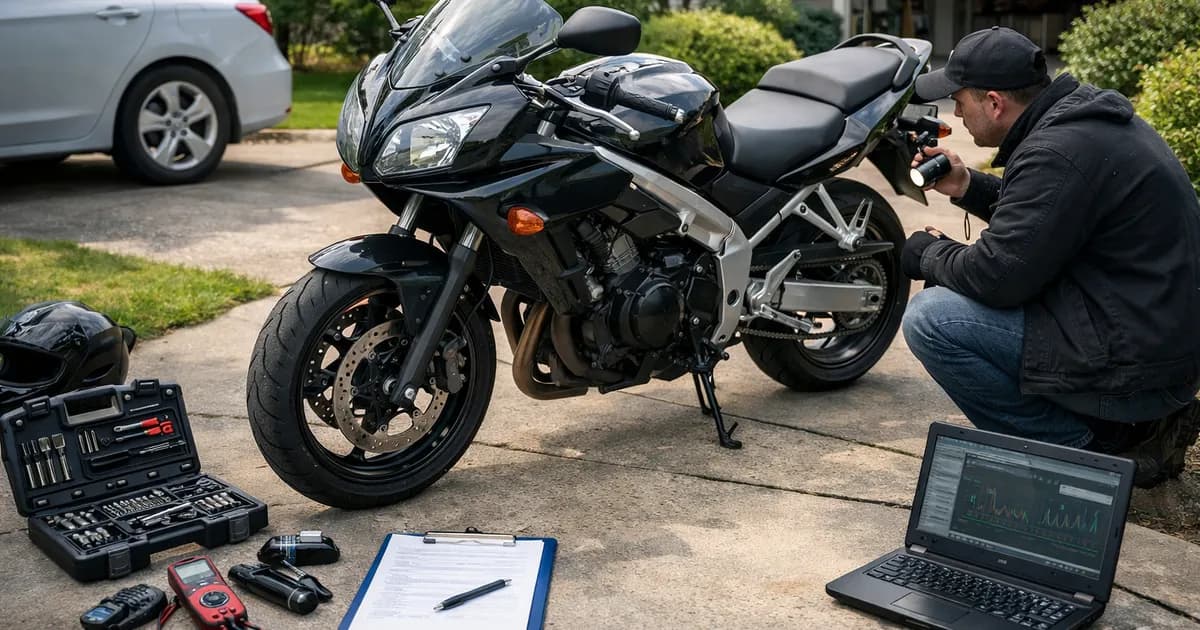
Inspecting a used motorcycle is not a matter of luck. It is about following a clear order, taking your time, and not getting carried away by haste. Here is a step-by-step guide so nothing important slips through the cracks.
What should I prepare before going to see a used motorcycle?
Search online for known issues with the model you are going to see. Write them down on your phone so you keep them in mind during the inspection. Ask the seller not to start the motorcycle before you arrive, because a cold engine tells you a lot more than a warm one. And wear clothes you do not mind getting dirty, because you will be crouching, touching, and looking in dirty places.
It is also worth preparing a list of questions for the seller: How long have they owned the motorcycle? Have they used it daily or only in summer? Do they have maintenance invoices? Has it had any damage? The answers they give before you even see the bike already tell you a lot about how the negotiation will go.
If you have access to the VIN, check the history through Carfax before making the trip. In five minutes, you can see whether the registration is valid, whether there are any liens or outstanding loans, and whether the stated mileage matches the last recorded reading. That information, before you see the motorcycle, avoids unnecessary trips and gives you bargaining power from the very beginning.
How do I carry out a visual inspection before touching anything?
Before touching anything, walk around the motorcycle and check its overall condition. Does it look naturally clean, or does it seem freshly and thoroughly washed? Are there scratches, dents, or parts that do not look original? Is the paint the same shade everywhere? A motorcycle that has been deep-cleaned right before sale may be hiding leaks or damage.
See whether the overall condition matches the age and mileage. A 5-year-old motorcycle with high mileage and a like-new appearance raises suspicion. And a low-mileage motorcycle with heavily worn rubber and scratched levers also does not add up.
Look for bolts with marks showing they have recently been turned. A bolt with a damaged slot or tool marks suggests someone has been inside the engine or casing. That is not necessarily bad, but it does deserve an explanation.
What should I check up close before starting the engine?
Now it is time to move in closer. Check the levers, handlebar end weights, footpegs, and indicators. These are the first parts to hit the ground in a drop. Inspect the fork tubes for scratches, rust, or oil residue. Check the chain, front sprocket, and rear sprocket. Take a look at the tires: tread depth and manufacture date (the DOT code on the sidewall). Check the oil level, brake fluid, and, if the motorcycle has liquid cooling, the coolant level.
One detail people often miss: look at the seat cover. A heavily worn seat on a low-mileage motorcycle tells you the odometer cannot be trusted. Wear on the seat, grips, and footpegs are the best indicators of a motorcycle’s real use.
Also check the exhaust system. Rust, holes, or an exhaust that is clearly not original are signs that need an explanation. An aftermarket exhaust without approval may prevent the motorcycle from passing inspection. If it is not road-legal, use that in the negotiation or walk away if the seller cannot prove it.
What does a cold start tell me about the engine’s condition?
This is the moment of truth. Ask to start it yourself (or have the seller start it in front of you). A healthy engine starts quickly and settles down without jerking or strange noises. Listen carefully: metallic knocking, high-pitched whistling, or an irregular idle are signs of internal problems. Watch the exhaust smoke during the first few seconds, when it gives you the most information.
Bluish smoke on startup indicates oil consumption (worn piston rings or valve guides). Persistent white smoke may indicate coolant mixing with oil or a head gasket problem. A little white vapor on a cold day is normal and disappears within a minute. If the seller starts the motorcycle before you arrive, be suspicious: they may be warming the engine to hide cold-start problems.
The engine sound at idle also deserves attention. A four-cylinder engine in good condition sounds smooth and fairly even. A single-cylinder or twin-cylinder engine may sound more pronounced, but it should not be uneven. Any repeated light metallic knock in rhythm may indicate slack in the timing chain or valves, and that is a major expense.
What do I check with the engine running and how do I test the motorcycle?
With the engine warm, check that all lights work: low beam, high beam, indicators, brake light, and license plate light. Test the horn. Apply the brakes with the engine running and make sure the feel is firm, not spongy. Put the motorcycle in neutral and check that the indicator lights up. If the motorcycle has a hydraulic clutch, look at the fluid reservoir.
If you can test ride it, do so. Shift through all the gears, including first and, if applicable, reverse. Brake firmly in a safe place to check stopping power. Pay attention to the steering: if it pulls to one side, there may be a problem with the triple clamps or the wheels. Check the suspension by going over a bump. And if something does not feel right, do not feel bad about saying so.
What should I ask the seller before deciding?
Ask why they are selling the motorcycle, how long they have owned it, whether they used it as a daily vehicle or only in summer, whether it has had any damage or drops, and whether all maintenance has been done. A transparent seller answers directly. One who dodges questions or gets nervous may be hiding something.
Before closing the deal, ask to see the registration and make sure the seller’s name matches the registered owner’s name. If there is a mismatch, there is a problem. Always sign a bill of sale, even in a private transaction, with the buyer’s details, the seller’s details, the vehicle, the price, and the date. That document protects you if any issue comes up after the purchase.
With AskPancho, you can follow this inspection point by point straight from your phone. Pancho adapts the questions to the exact motorcycle model and tells you what to look for at each step. Cheap should not end up being expensive.