
The Money-Wasting Mistakes to Avoid When Buying a Cheap Used Motorcycle
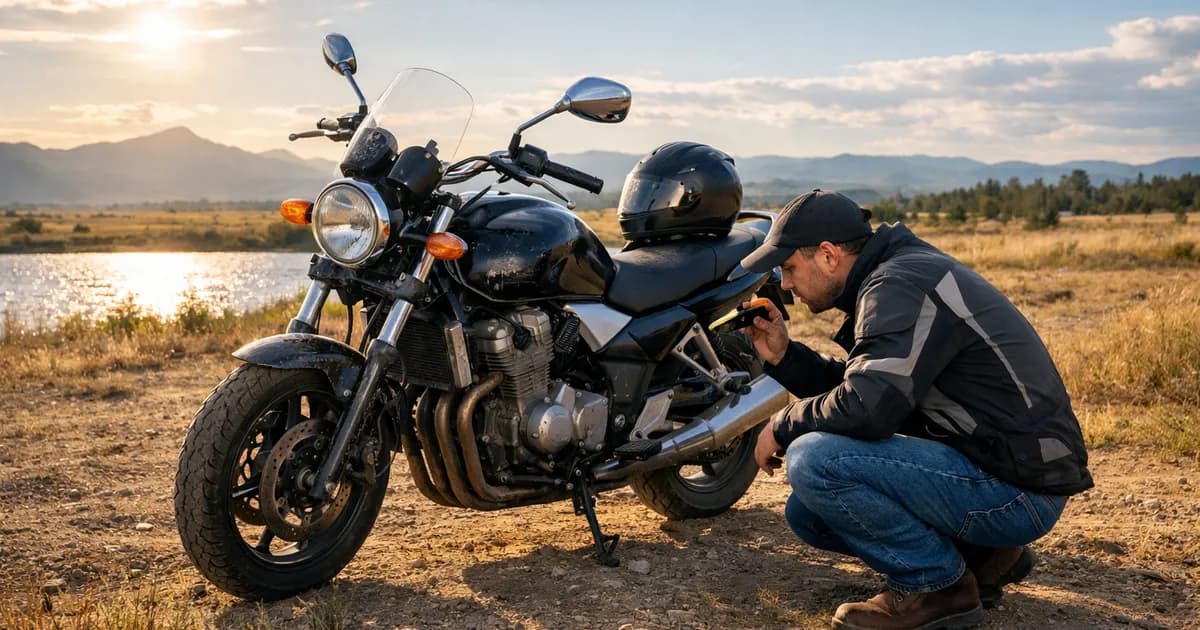
Buying a cheap used motorcycle can be a great idea. But there are mistakes that turn a bargain into a money pit. They are simple mistakes, the kind that seem insignificant until the bill arrives. With a little attention before and during the inspection, most of them can be avoided.
Why is it so important to add up refurbishment costs before deciding?
The asking price is only the beginning. A used motorcycle that has been sitting without proper maintenance may need tires (between 100 and 300 euros for a pair), a drive chain and sprockets set (between 150 and 400 euros), brake pads (between 30 and 80 euros per axle), oil and filters (between 40 and 80 euros), and a battery (between 40 and 100 euros). If you add it all up, a motorcycle priced at 2,000 euros can easily cost 2,500 or 2,800 euros before it is ready to ride with confidence.
The most common mistake is comparing the asking price directly with another motorcycle that is already road-ready. To make a fair comparison, you need to add the estimated refurbishment costs to the asking price. Only then will you know whether the cheap motorcycle is truly cheap or just on paper.
One way to get a realistic estimate is to check local repair shops for the price of each job separately. Call a couple of places and ask how much they charge to replace the drive chain and sprockets on your specific model. In five minutes, you have a real figure. If the final total is higher than the market value of a similar motorcycle in good condition, the bargain is no longer a bargain.
What happens if I buy a motorcycle without test riding it?
Some people buy a motorcycle without sitting on it, starting it, or riding it even for a kilometer. That is like buying a pair of shoes without trying them on. Whenever possible, insist on a test ride. If the seller refuses, ask yourself why.
On a test ride, you notice things you cannot see when the bike is stationary: gears that do not engage properly, spongy brakes, a steering pull to one side, unusual vibrations, or engine noises that disappear as soon as the seller is nearby. Those are signs you cannot detect any other way. A 15-minute test ride can save you hundreds of euros in surprises.
Before starting it, ask for a cold start. A cold engine that takes a long time to fire up, blows blue smoke, or shakes irregularly is telling you something. Blue smoke points to oil consumption. Black smoke or the smell of unburned fuel suggests fueling issues. They are not definitive diagnoses, but they are signs that need to be investigated before signing anything.
How to tell if a motorcycle has been dropped when buying a used motorcycle
A motorcycle having been dropped is not necessarily a disaster. But it depends on how it happened. A scratch on the lever from a low-speed tip-over is one thing. A bent triple clamp, twisted frame, or radiator with impact damage is something very different. If you see signs and the seller says it has never been dropped, be skeptical.
The clearest signs a used motorcycle has been dropped are: scrapes on the fairings or tank on the same side, bent levers or foot controls, a broken or replaced mirror, scratched engine guards, and scrape marks on the exhaust. If all the damage is concentrated on one side, the bike has almost certainly been down on that side. That does not automatically mean you should walk away, but you need to know it and negotiate accordingly.
A low-speed drop in a parking lot leaves surface marks. A moving crash can affect the forks, swingarm, or frame in ways that are not obvious at first glance but show up while riding. If the steering does not track straight or the motorcycle does not stay stable in a straight line, the problem may be structural. In that case, the repair is expensive and technically complex.
Why should you check the exhaust and paperwork before closing the deal?
The exhaust system is one of the most expensive parts on a motorcycle. If it has rust pitting, holes, or is not original, ask why. A new OEM exhaust can cost several hundred euros, and an aftermarket one needs an approval certificate to pass the State Vehicle Inspection.
In the paperwork, make sure the VIN stamped on the motorcycle matches the documents. Check that the seller is the registered owner. And if the bike has non-original parts (exhaust, indicators, mirrors), make sure they are approved. Without approval, it will not pass the State Vehicle Inspection. A motorcycle with the paperwork in order is a motorcycle with fewer surprises.
Also check whether the motorcycle has outstanding liens, is under a seizure order, or appears in stolen vehicle records. In the United States, you can do this through the DMV or a vehicle history report service. The cost is minimal and can save you from a serious problem. If the seller refuses to give you the full VIN so you can run that check, that is a major red flag.
Can I trust the odometer on a used motorcycle?
Motorcycle odometers can be tampered with, just like car odometers. But on a motorcycle there are many clues that reveal the real use: worn grips, footpeg rubbers, the condition of the seat, and wear on the ignition key. If everything looks very worn but the odometer shows low mileage, something does not add up.
Also ask for the Vehicle History Report if the bike has inspection records. Mileage is recorded at each inspection and is something the seller cannot alter. If the mileage shown on the inspection records does not match the odometer, there is an inconsistency that deserves an explanation.
Another useful indicator is the condition of the chain and sprockets. A badly stretched chain or very worn sprockets mean either high mileage or poor maintenance, both equally important. Tire condition also tells a story: if they are several years old, the rubber loses performance even if the tread still looks fine. Check the manufacture date stamped on the sidewall, which appears as a four-digit code showing the week and year.
Is it a bad idea to buy a used motorcycle out of season?
It is legal to buy a motorcycle without a current State Vehicle Inspection, but that does not mean it is a good idea. If it does not have an inspection, there may be technical problems the seller has not wanted to fix. And until you pass the inspection, you cannot ride it legally. If you buy one without a current inspection, negotiate a serious discount: the cost of the inspection plus any repairs needed to pass it.
Keep in mind that a motorcycle that has gone years without inspection may have accumulated problems: worn brakes, burnt-out lights, out-of-spec tires, or emissions above the limit. Each of those issues has a cost. Before accepting the seller’s price, estimate how much it will cost to get it road-legal. If the seller will not negotiate on that margin, it means the price already assumes you will absorb those costs.
With AskPancho, you can inspect the motorcycle point by point without missing anything. Pancho knows the typical problems of each model and guides you while you inspect it. Don’t let a cheap motorcycle become an expensive mistake.