
How to Negotiate the Price of a Used Motorhome
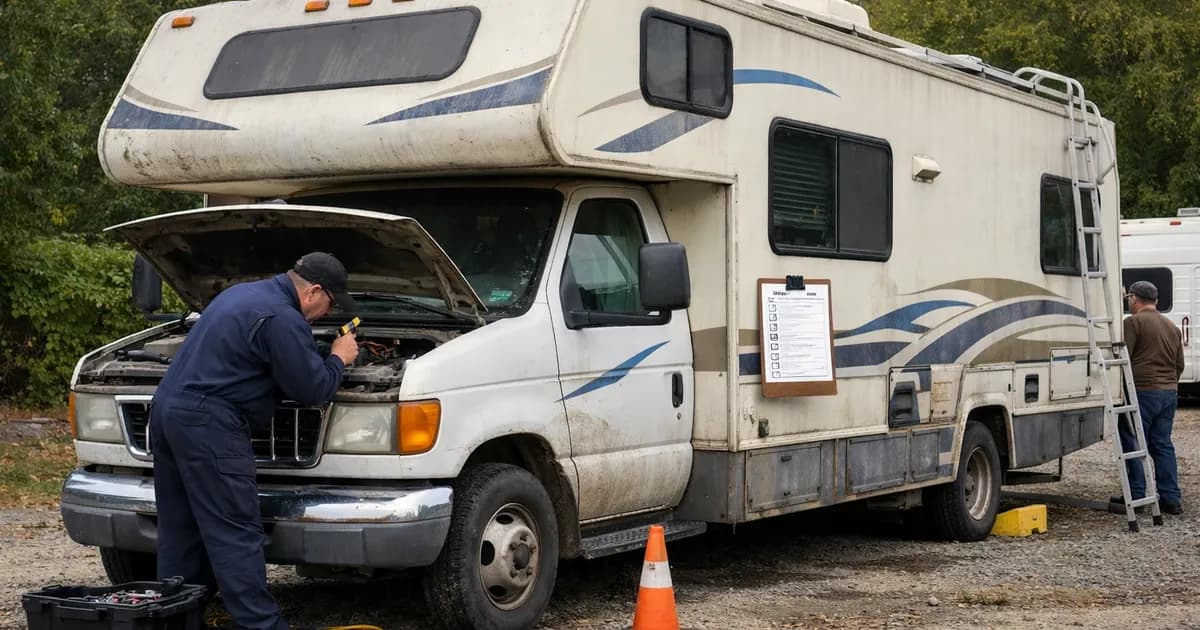
Negotiating the price of a used motorhome is not about haggling for the sake of it. It is about aligning what you pay with what the vehicle is really worth, with its faults and outstanding expenses. And the best arguments come before you even start talking about money. Anyone who shows up to negotiate without information negotiates from a position of weakness; anyone who arrives with data negotiates from a position of strength.
How do you prepare to negotiate a motorhome before seeing it?
Look for the same model with similar age and mileage on several platforms. The motorhome market is smaller than the car market, so prices can vary a lot between listings. Having a clear market price range gives you a solid benchmark to know whether the asking price is high, low, or about right.
Set your maximum budget before you leave home. Not the price you would like to pay, but the absolute maximum, including title transfer, insurance, taxes, and any immediate repairs you can foresee. If the vehicle goes over that number, it is not your motorhome. Having that limit clear protects you from emotional decisions made when you are standing in front of the vehicle and excitement clouds your judgment.
What should you check before talking price with the seller?
Every defect you find is a real argument for negotiation. Do not rush into talking about money. First inspect the entire vehicle: bodywork, engine, living area, gas, water, heating, fridge, tires, batteries, seals. Write down everything that is not right.
In motorhomes, hidden costs are especially useful in negotiation because many of them are expensive and specific to the industry. If the seller does not know the RV world well, they may not even know what those repairs cost. That gives you an advantage: when you tell them the tires are six years old and that means an $800 replacement, many sellers do not expect it.
Which specific arguments work best to lower the price?
- “The tires are over five years old, they need replacing.” Four motorhome tires are a significant expense. It is a solid and immediately verifiable argument by checking the DOT code. There is no room for debate if the date is printed there.
- “The gas certificate is expired.” The required inspection has a cost, and if the system fails, repairs add up. Without a valid certificate, there may be issues with insurance coverage and road use.
- “There are signs of damp in the roof/cabinets/walls.” Damp is the strongest argument because everyone in the RV world knows how much it costs. If you have found stains, soft spots, or a musty smell, that is serious money.
- “The leisure battery does not hold up.” If you have checked that the battery voltage drops when several appliances are switched on, you need a new one. Say it with numbers: “It dropped to X volts when I turned on the fridge and the lights.”
- “The heating system shows an error / will not start.” Repairing a Truma or Alde heating system is not cheap. If it does not work, that is a strong and immediately verifiable argument.
- “The exterior seals are cracked.” If they are not replaced, water will get in. And if water has already entered, the problem is bigger. Show the photos you took during the inspection.
What negotiation tactics work when speaking with the seller?
Do not show too much enthusiasm. Motorhomes create a lot of excitement, and sellers know it. If they see you are crazy about the vehicle, they lose all motivation to lower the price. Ask the questions you need to ask, inspect everything carefully, and take notes. Do not say, “This is exactly what I was looking for,” before you have negotiated.
Start lower than the price you actually want to pay. If your target price is one amount, offer less. Not an insulting amount, but enough to leave room. The seller will make a counteroffer and you will meet somewhere in the middle. If you start at your maximum, you have no room left.
Use silence. After making an offer, stay quiet. Many buyers get nervous in silence and start justifying themselves or raising their own offer. Make your offer, explain why, and wait. Let the seller speak first.
What if the seller will not lower the price or uses arguments to hold firm?
The most powerful negotiation tool is being willing to walk away. If the price does not fit, thank them for their time and leave. Very often, you will get a message the next day with a better price. And if you do not, then that motorhome was not meant for you.
These are the arguments sellers usually use and how to respond:
- “I have three people interested.” That may be true, or it may be pressure. Do not change your strategy because of it. If the price does not fit, walk away anyway.
- “I’ve put thousands into upgrades.” Ask for the invoices. If they have them, that is a fair reason to hold the price. If they do not, it is just a phrase.
- “It is below what I paid for it.” That has nothing to do with you. The market price is what it is, not what the seller paid for it years ago.
How do you close the deal without making mistakes?
If you reach an agreement, put it in writing before handing over a single dollar. The price, the condition of the vehicle, what is included, the terms, the handover date. Without a signed document, a deposit is money you could lose with no guarantee. Even if the seller seems trustworthy, misunderstandings happen, and a contract protects both sides.
The best negotiation is the one you do with real information. You know what it is worth on the market, you know what it is missing, and you know how much it costs to fix. With AskPancho, you can inspect the motorhome thoroughly during the inspection. Pancho guides you step by step, asks for photos, and gives you a detailed report. With that information, your arguments for negotiation are facts, not opinions. Cheap should not become expensive. If you want to avoid common mistakes, check what people forget when they are in a hurry.