
How to Inspect a Used Motorhome Before You Buy It
Carefully inspecting a used motorhome before buying it takes time. More than a car, because you have to check two things: a vehicle and a home. But you do not need to be an expert. You need a method, patience, and to know where to look. If you prepare properly at home and take your time, you can spot most problems without ever setting foot in a workshop.
What should you prepare before going to see a used motorhome?
Look up the exact model in motorhome forums. Find out what issues it has, what usually fails, and where to look. Every brand has its weak points, and owners talk about them online in quite a bit of detail. About twenty minutes of research before the viewing is worth more than an hour of looking around without knowing what you are searching for.
Ask the seller for photos of the roof (inside and out), the inside of the cabinets, under the mattresses, the engine, the underbody, and the bathroom area. Ask for the license plate and verify the state inspection, ownership, and history through the DMV and a Vehicle History Report. Ask whether it has a valid gas inspection certificate and maintenance invoices.
- If the seller does not want to send detailed photos or does not answer basic questions, do not go.
- If all the photos they send are of the interior and none of the roof or underbody, ask specifically for those areas.
- If the state inspection is not valid, rule out the vehicle or be prepared to negotiate hard.
How should you organize the viewing so you do not miss anything?
Light matters even more than it does in a car. In poor light, you will not see paint differences on the body, cracked sealants on the roof, or damp stains inside. Arrange to meet at midday and outdoors. If the seller insists that you come to a closed garage or first thing in the morning with bad light, that is a red flag.
And take your time. A serious inspection of a motorhome should start with the most important points and take at least an hour. If you are rushed, you will only skim over everything and leave important things unchecked. Bring a charged phone, a small flashlight, and, if you have one, a pocket hygrometer to detect damp.
Where should you start the exterior inspection of a motorhome?
Always start outside and at the top. Look over the bodywork for dents, deep scratches, and differences in paint tone. Check the underbody for rust and leaks. If you can, inspect the roof: look for deteriorated sealant around skylights, antennas, and air vents.
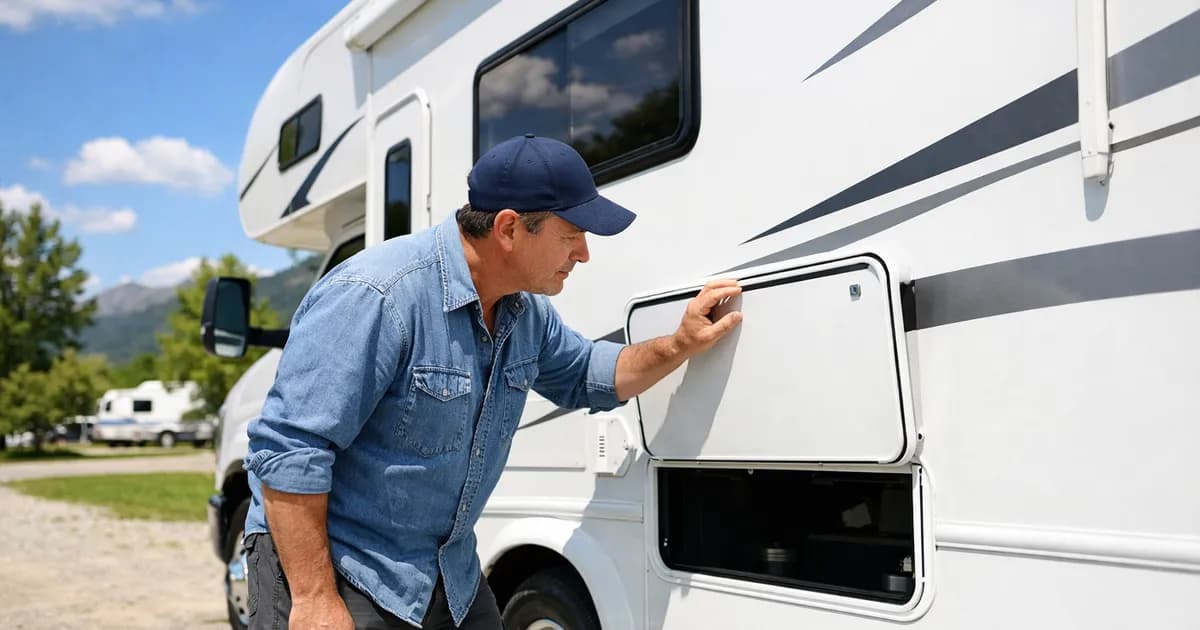
- Check the exterior storage compartments: they should open and close properly and there should be no damp inside.
- Inspect the awning if it has one: it should deploy properly, have no tears, and the mechanism should move without sticking.
- Look for differences in color or texture in the coachbuilt bodywork: they may indicate previous repairs after damage or damp.
- Check the tow hitch area if it has a tow ball: it should be in good condition and the electrical connector should work.
How do you inspect the interior of a motorhome without being an expert?
The first thing you should do when you step inside is smell. If it smells stale, damp, or moldy, that is your first warning sign. Then open every cabinet, lift every mattress, and look behind the dinette cushions. Touch the walls and ceiling, looking for soft or swollen areas. A soft spot in the wall or ceiling almost always means old damp.
Check that all cabinet doors, drawers, windows, and skylights open and close properly. Test the beds: make sure they set up correctly and the mechanisms work. Look at the overall condition of the furniture, upholstery, and finishes. The level of care inside says a lot about general maintenance.
How do you test all the living systems in a motorhome?
This is the part that most clearly separates a serious inspection from a superficial one. It is not enough to look: you have to switch things on, test them, and wait. Do not assume anything is fine until you have checked it yourself.
- Gas: ask for the gas installation certificate. Open the cylinder compartment and check the hoses. Make sure the main shutoff valve works. Light all burners and the water heater.
- Heating: switch it on and wait for it to start and heat properly. Always do this, even in summer. If it does not start or takes too long, that is a clue.
- Fridge: check all three modes (gas, 12V, 230V). Ideally, the seller will have turned it on hours earlier. If it is warm and the seller says it works fine, do not trust it.
- Water: turn on every tap, check for hot water, and look for leaks in the pipes and connections. Test the toilet and cassette.
- Electricity: switch on the lights, test the outlets, check the auxiliary battery and the solar panel if it has one. Look at the control panel to make sure the indicators respond.
What should you check on the mechanical side of a used motorhome?
The mechanics are checked the same way as in a car, but with extra care in the areas that suffer most from the vehicle's weight. Start it cold. Check fluid levels. Look underneath for oil, brake fluid, or coolant leaks. Drive it in town and on the highway. Shift through all the gears. Brake hard. Test the air conditioning, vehicle lights, and windshield wipers.
Check the tires: tread, uneven wear, and especially the manufacturing date in the DOT code. If they are more than five or six years old, factor that cost into the purchase price even if they look new. Also check the timing belt condition if the engine is diesel: it is one of the mandatory expenses if there is no recent invoice showing it was replaced.
What paperwork should you review before buying a used motorhome?
The paperwork tells you almost as much as the vehicle itself. Registration and title paperwork (which should match the actual vehicle), a valid state inspection, a gas certificate, and a maintenance history with repair invoices. Verify that there are no liens, seizures, or financing. And that the seller is the legal owner.
- If there are workshop invoices with the same name and address for years, that is a good sign.
- If maintenance has always been done at the brand's dealerships, even better.
- If there are no invoices from the last three years, budget for a full recommissioning.
Bring a charged phone and take photos and videos of absolutely everything. The outside, the inside, the engine, the details, the damage, the paperwork. Photos let you review everything calmly at home, compare it with other vehicles, and have proof of the condition at the time of purchase. And if you want to avoid common mistakes, check out the silly mistakes that will cost you money when buying a cheap used motorhome. If you have doubts after the viewing, go home and think it over. Review the photos carefully, look up the problems you found, and calculate how much they would cost. If the numbers work, go back. If not, keep looking.
With AskPancho you can carry out this entire inspection step by step while the motorhome is right in front of you. Pancho guides you through each point, asks for specific photos, and at the end gives you a report with everything it found. Don’t let a cheap buy turn out expensive.