
How Much Does It Really Cost to Get a Used Car Road-Ready?
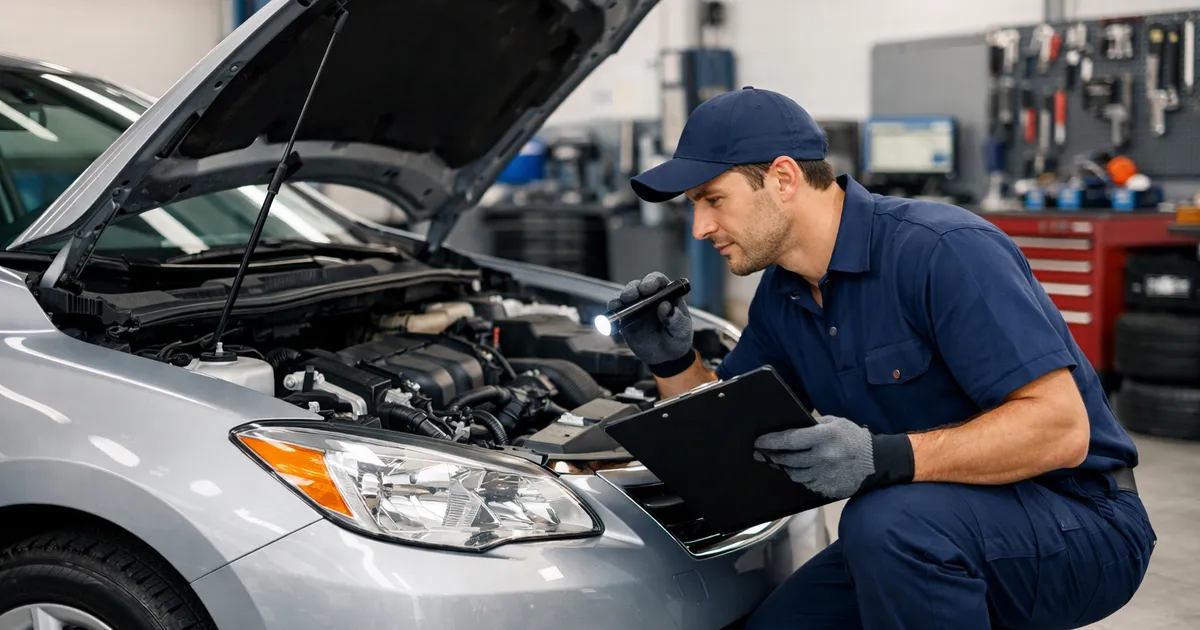
When you buy a used car, the advertised price is only part of what you will actually pay. There are maintenance costs you will probably have to face in the first few months, and you should factor them in before closing the deal. The difference between a bargain and a money pit is in the numbers nobody tells you about in the ad.
What basic maintenance does a used car almost always need?
There are a few jobs that, unless the seller can prove with invoices that they were done recently, you should assume will be your responsibility. They are the most common and the cheapest, but together they can still add up to a significant expense.
- Oil and filters: even if the seller says the oil was just changed, if there is no invoice, do it yourself. An oil and filter change costs between 50 and 120 euros depending on the car and the type of oil. The air filter and cabin filter cost between 10 and 30 euros each. It is a simple job that any workshop can do in less than an hour.
- Brake pads: pads wear out and are a critical safety component. A set of pads for one axle costs between 20 and 60 euros, plus labor (between 30 and 60 euros per axle). If the discs are also worn, add between 40 and 100 euros per disc. On a car with more than 60,000 km, it is likely that at least the front pads are close to the limit.
- Tires: if they have little tread left, are out of balance, or are more than 5 or 6 years old (check the date on the sidewall), they need replacing. A set of four tires can cost between 200 and 600 euros for an average car, plus mounting and balancing.
- Windshield wiper blades: worn wiper blades are dangerous in the rain and a reason for failing a State Vehicle Inspection. They cost between 15 and 40 euros for a set.
These four jobs together can total between 150 and 350 euros if everything is at the low end. That is not a huge amount, but it should be counted as part of the car’s real price.
Which repairs depend on the car's history and mileage?
Beyond basic maintenance, there are components that are replaced at set mileage or time intervals. If the car does not have a clear service history, these are the items where a big expense can be hiding.
- Timing belt: if there is no invoice for a recent replacement and the car is within the replacement interval (usually between 60,000 and 120,000 km or between 5 and 10 years), it needs to be done. It is one of the most important repairs because if the belt breaks, the engine can suffer irreparable damage. It costs between 300 and 800 euros depending on the car.
- Clutch: if you notice it slipping, smelling burnt, or the gears are hard to engage, it needs replacing. A complete clutch kit (disc, pressure plate, and release bearing) costs between 600 and 1,200 euros with labor. It is an expensive repair because the gearbox has to be removed.
- Shock absorbers: if the car bounces excessively over bumps or the body rolls a lot in corners, the shock absorbers are worn out. Replacing a pair (front or rear) costs between 200 and 500 euros with labor. Worn shock absorbers are not only uncomfortable; they also increase braking distance.
- Battery: if the car cranks slowly or the battery is more than 4 or 5 years old, it probably needs a new one. A battery costs between 60 and 150 euros. It is a wear item with a limited lifespan that many sellers do not mention.
The clutch and timing belt are the two expenses that surprise buyers the most. Together they can add up to between 900 and 2,000 euros, and both have one thing in common: they cannot really be postponed. When they need doing, they need doing.
What fluids should be checked or changed in a used car?
Car fluids degrade over time, even if the car has done very few miles. If they have not been changed for years, they can cause problems that cost far more than the fluid change itself.
- Brake fluid: it absorbs moisture from the air over time. When it contains too much water, its boiling point drops and the brakes can lose effectiveness under heavy braking. Changing it costs between 30 and 80 euros.
- Coolant: it loses its anti-corrosion properties over the years. Old coolant can cause internal corrosion in the engine and radiator, which is much more expensive to repair. The change costs between 30 and 80 euros.
- Power steering fluid: in cars with hydraulic power steering (not electric), the fluid also degrades. If the steering makes noise when turned fully lock to lock, it may be a sign that it needs changing or that there is a leak.
Changing all three fluids at once costs between 90 and 240 euros in total. It is a small expense compared with what it can cost to ignore them.
How do I calculate the real cost of a used car before buying it?
For a used car with reasonable maintenance, the basic road-ready work (oil, filters, brakes, wiper blades) can add up to between 150 and 350 euros. If it also needs tires, a timing belt, or a clutch, you can easily end up with an additional 1,000 to 2,000 euros.
To calculate the real cost:
- Add the car price plus the estimated road-ready costs you think are needed. That is your real price.
- Compare that figure with what a similar car would cost if its maintenance were already up to date. Sometimes the difference is small and you save yourself a lot of headaches.
- Use the estimated costs as a negotiation tool. If the car needs tires and a timing belt, that is money the seller knows has to be spent.
This calculation is the difference between a bargain and a trap. Before you negotiate, run the numbers. And if the seller has invoices for all the maintenance up to date, give that real value, because it saves you money and worry.
How can I tell what the car needs before closing the deal?
The best way is to carry out a systematic inspection before paying. It is not enough to start the engine and drive around the block. You need to check each of the items we have described and ask for invoices for each one.
Some things are visible at a glance: the condition of the tires, whether the wiper blades clear properly, or whether there are strange noises from the steering or engine. Others need a workshop to measure them: brake pad thickness, brake fluid moisture level, and shock absorber condition. If you have any doubts about any of these points, ask for a pre-purchase inspection at a workshop before closing the deal. It costs between 30 and 80 euros and can save you several hundred.
With AskPancho you can inspect the car step by step and get an idea of what it will need before you buy it. Pancho guides you through the key points of the specific model you are looking at, asks for photos, and helps you spot the expenses ahead. That way, you can make your decision with all the numbers on the table.