
Buying a Used Bike for Sale: What People Forget in a Hurry
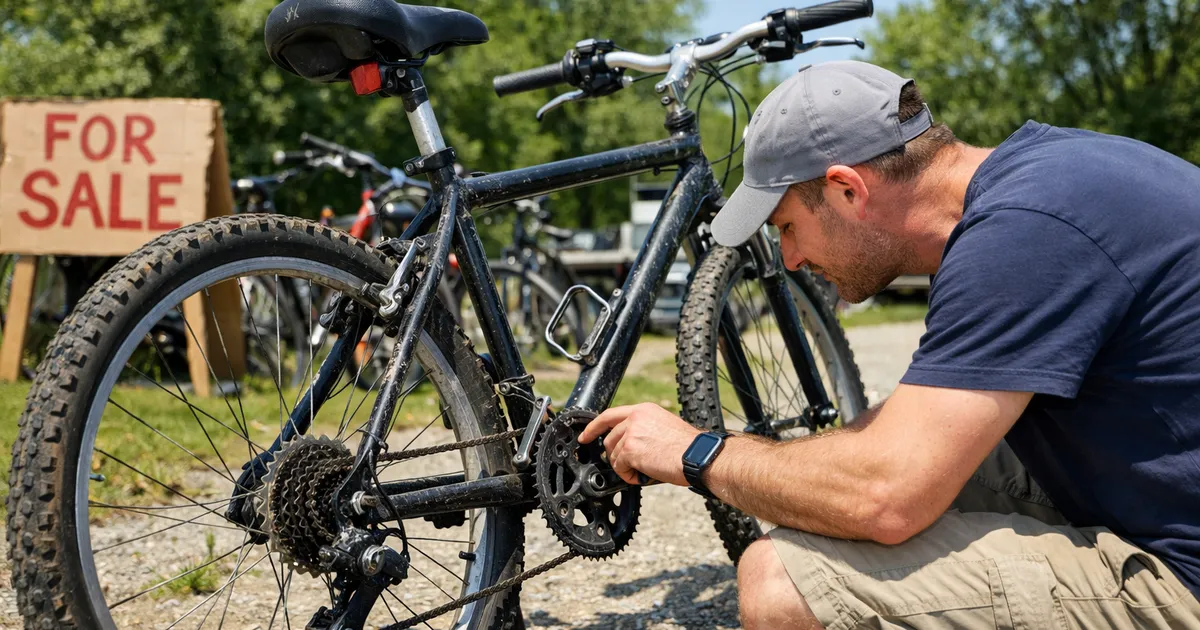
Most bad second hand bicycle purchases are not caused by complicated mechanical failures. They happen because people do not prepare, rush the process, and do not dare to say no. These are simple things, but that is exactly why they get overlooked. This guide tells you what to do before, during, and after seeing the bike.
What to check when buying a used bike before you go to see it
Before you meet anyone, there are things you can check from home that will save you time and avoid headaches.
- Ask for real photos. If the listing only has one nice side-profile photo, ask for more. Make sure you can see the components up close, the drivetrain, the brakes, and the wheels. A general photo tells you nothing about the bike’s real condition.
- Ask for the serial number. Most bikes have a stamped serial number, usually on the underside of the frame. With that number, you can check if a used bike was stolen in stolen bike registries. If the seller does not want to give it to you or says they cannot find it, that is a bad sign.
- Research the market price. Look up the model on several platforms so you have a reference. If the price is much lower than normal, ask yourself why. The mistakes that can make you lose money when buying a cheap bike often start with a price that is suspiciously low.
- Look up the model in forums. Every model has its weak points. Ten minutes of reading in a cycling forum can save you from an expensive mistake.
How to plan the visit so you do not miss anything
Just like with a car, lighting matters. In poor light, you will not see cracks in the frame, rust on components, or the true wear on the parts. Meet at midday and outdoors whenever possible.
Give yourself plenty of time. If you arrive rushed, you will only do a quick look and decide too fast. Fast decisions on used bikes usually end up being expensive. Bring a charged phone to take photos and, if you know someone who understands bikes, it is better to go with them.
What to check when buying a used bicycle during the inspection
This is the most important part, and it has nothing to do with being a mechanic.
- Look at the frame in good light for cracks, dents, and rust. If it is carbon, run your hand over the tubes and feel for irregularities that you cannot see but can feel.
- Test all the gears, shifting up and down. The transitions should be clean and quiet.
- Brake hard with each brake separately. Braking should feel firm, without excessive squealing and without the bike pulling to one side.
- Spin the wheels and check that they run straight. Look for broken or loose spokes.
- Grab a crank arm and move it side to side. If there is play, the bottom bracket is worn.
- Check the seatpost: loosen the clamp and make sure it moves up and down without problems.
Just sitting on it and pedaling twice is not enough. Shift through all the gears, brake hard, listen for strange noises, and check that the wheels spin straight. If you can, take it for a longer ride. Many problems only show up once the bike is moving.
What to do if the seller rushes you or does not want you to inspect something
If the seller does not want you to test it, rushes you, or puts obstacles in the way when you try to inspect something, they are hiding a problem. There is no valid excuse. Someone who is selling something legitimately has no problem with you checking it thoroughly, riding it, or asking whatever you want.
If any of these things happen, walk away. There is nothing about that bike worth buying blind. There are more bikes out there. If the price is very good and the seller will not let you inspect it, the price is the trap.
How to negotiate the price and close the purchase of a used bike
You have seen it, tested it, and inspected it. Now it is time to talk money.
- Bring a maximum budget and do not go over it. Decide it before you leave home. If the price goes beyond it, it is not your bike.
- Use any defects you found to negotiate. Every worn part, every component that needs replacing, is a reason to lower the price. Do not hesitate to mention them.
- Never leave a deposit without a written contract. It does not matter if it is a bike and not a car. Without a document stating the price and the terms, a deposit is money you could lose with no protection at all.
What documents and final checks do I need before paying?
Before handing over any money, ask to see the seller’s ID and write down their details. Check that the seller’s name matches the bank account name if you are transferring money to a personal account. If the bike has an original purchase receipt, ask for it to be included in the sale: that document can be useful later if any claim comes up about the bike’s origin.
Write up or ask for a simple bill of sale that includes the model, the serial number, the agreed price, and the date. It does not need to be notarized: it is enough for both parties to sign it and keep a copy. That paper protects you against any later issues and shows that the purchase was made in good faith.
With AskPancho you can inspect the bike thoroughly during the check. Pancho knows the weak points of each type of bicycle, including the used e-bike, and guides you step by step while you have it in front of you. It is like carrying an expert in your pocket. Don’t let a cheap buy turn into an expensive mistake.