
How to Tell if a Used Car Has Altered Mileage
Odometer tampering is illegal, but it still happens. It is estimated that some used cars sold in Europe have had their mileage altered. You do not need to be a mechanic to spot it: there are clear signs you can check yourself before you pay. If you know where to look, you have a very good chance of catching it.
What wear-and-tear signs reveal a car's real mileage?
The odometer can be changed with an electronic tool in a matter of minutes, but a car's wear cannot be erased. That is the first thing you should check, because it is the hardest to fake.
Pay special attention to these points:
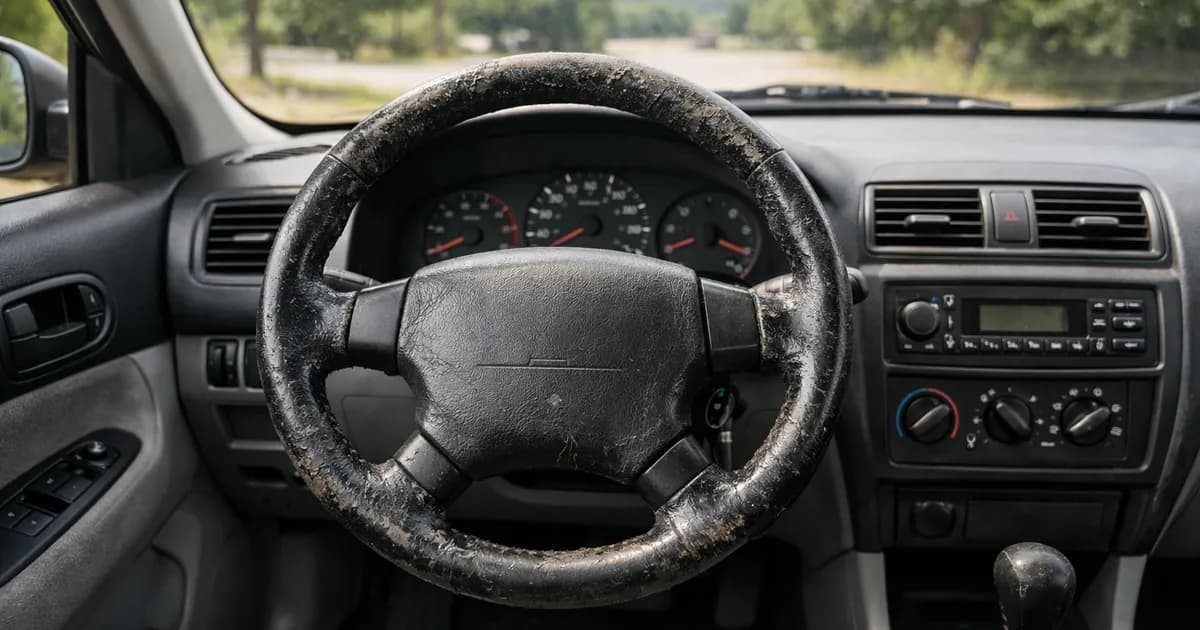
- The steering wheel: a shiny steering wheel, with the leather or plastic texture worn smooth from friction, usually means a lot of miles. If the car supposedly has 60,000 km but the steering wheel looks like one from a 200,000 km car, something does not add up.
- The pedals: polished rubber pedals, with a flat surface and no tread left, point to heavy use. If they look brand new on an older car, they may have been replaced to hide wear.
- The gear shifter: the leather on the shifter and its boot wears down with use. In a low-mileage used car, the shifter should still have its original texture.
- The driver's seat: a sunken seat, with deformed padding or cracked leather, tells the story of many miles. Compare it with the passenger seat: if the difference in wear is large, the car has been driven a lot.
How can I use the maintenance history to verify the mileage?
The service book or workshop invoices are some of the most useful tools for verifying the real mileage. At each service, the shop records the date and the car's mileage. That creates a timeline that should always move upward.
What you should look for:
- Consistency: the mileage from one service to the next should increase logically. If the car had 80,000 km at one service and shows 60,000 km at the next, there is a serious problem.
- Reasonable intervals: a private car in Spain covers an average number of miles each year. If the invoices show intervals that are wildly above or below that range in an irregular pattern, it is worth asking the seller about it.
- No history at all: having neither a service book nor invoices does not necessarily mean fraud, but it means you cannot verify anything. And that alone is already a reason to be extra cautious or ask for a significant discount.
What mileage information is recorded in the State Vehicle Inspection?
In Spain, every time a car passes the inspection, the date and mileage are recorded. These data are stored and can be checked. It is one of the most reliable ways to detect tampering because the owner cannot control what gets recorded during the inspection.
What you can do:
- Request the DMV vehicle history report: using the vehicle's license plate, you can request a report that includes the mileage recorded at each inspection. If the mileage goes down between two inspections, the tampering is obvious.
- Compare it with workshop invoices: cross-check the inspection mileage with the maintenance history. If they match reasonably well, that is a good sign. If there are major discrepancies, dig deeper.
- Ask the seller: ask them to provide the inspection reports before you go see the car. If they refuse or make excuses, that is a fairly clear sign they do not want you to see something.
Which car parts reveal that the mileage does not match?
Some components are replaced at fairly regular mileage intervals. If a car shows low mileage but has new parts that are normally replaced at much higher mileage, the contradiction is hard to explain.
- Brake discs and pads: brand-new discs on a car that supposedly has low mileage are suspicious, because their wear should be consistent with use.
- Clutch: a clutch usually lasts quite a few miles, although it depends a lot on how the car is driven and on the model. If the car shows 60,000 km and the clutch is new, the numbers do not add up.
- Timing belt: this is usually replaced according to the manufacturer's maintenance schedule, sometimes by mileage and sometimes by time. A recent replacement on a low-mileage car may indicate it actually has far more miles.
- Tires: four new tires on a car that supposedly has low mileage are not necessarily suspicious (they may have been replaced due to age), but they do deserve a question.
Why can workshop stickers expose used car mileage fraud?
It is a small detail, but a very revealing one. Many workshops leave a sticker on the driver's door frame or in the engine bay with the date and mileage of the last oil change or service.
When someone tampers with the odometer, they usually focus on the instrument cluster and deleting digital records. But physical stickers often stay there because nobody remembers to remove them. If the workshop sticker says "120,000 km, March 2024" and the odometer shows 75,000, you have fairly solid proof of tampering.
Also check under the hood, on the air filter cover or near the radiator. Some workshops place reminders for the next service with the mileage written on them.
How can you tell from the interior if a car has been driven more than it claims?
The car's interior is a silent witness to real use. Beyond the steering wheel and pedals, there are other parts that wear down and are hard to disguise:
- Buttons and controls: the buttons for the climate control, radio, and power windows lose their printed markings with use. If the symbols are worn off, the car has seen a lot of use.
- Dashboard plastics: scratches, shine, and scuff marks appear over time and cannot be removed without replacing the part.
- Seat belts: pull them all the way out and check whether they are dirty, frayed, or show signs of wear. It is not something people replace for looks.
- Original floor mats: if the original floor mats are destroyed or replaced with generic ones, ask yourself why.
Why are imported cars at higher risk of having altered mileage?
Cars imported from other countries carry a higher risk because the technical inspection history from the country of origin is not always accessible from Spain. Every country has its own registration system, and not all of them share data with each other.
Things to keep in mind with an imported car:
- Country of origin: some markets have a worse reputation than others when it comes to mileage fraud. Cars from certain countries, for example, may have a higher incidence of mileage tampering.
- Documentation: ask for all the paperwork from the country of origin: service book, invoices, technical inspection reports. If the seller cannot provide anything, your suspicion is justified.
- VIN verification: the vehicle identification number (VIN) lets you check the car's history in international databases. Some of these checks cost money, but they can save you from a very expensive mistake.
Do I need to be an expert to spot tampered mileage in a used car?
No. All the signs we have covered are things you can check yourself once you know they exist. You do not need special tools or advanced mechanical knowledge. You just need to know where to look and avoid rushing in because of a tempting price.
With AskPancho, you do not have to memorize this checklist. Pancho guides you through the car inspection, tells you what to check based on the model and year, and asks for photos to analyze the car's real condition. If something does not match between what the odometer says and what the car shows, you will know before you pay.