
How to Choose the Right Size for a Used Bike for Sale
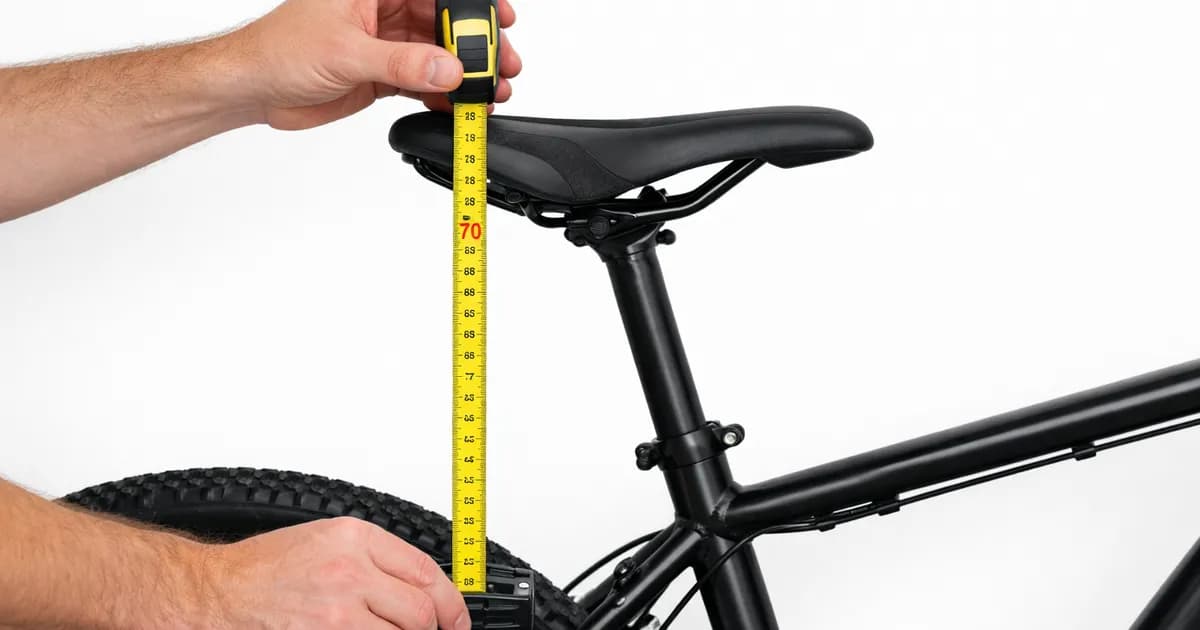
Buying a second hand bicycle in the wrong size is throwing money away. No matter how good the price is or how nice it looks: if it is not your size, you will be uncomfortable, your knees, back, or wrists will hurt, and in the end you will leave it parked. Frame size is the only thing you cannot change, so it is worth spending five minutes on it before you pay.
Why does bike size matter more than price or brand?
A bike that is too large forces you to overreach to the handlebars, which puts strain on your shoulders, neck, and wrists. A bike that is too small makes you pedal with your knees too bent, which creates joint discomfort and reduces pedaling efficiency. In the short term, it is uncomfortable. In the medium term, it can cause overuse injuries, and those are a lot less fun than the money you saved.
The problem with the wrong size is that many people do not notice it during the viewing. The excitement of seeing the bike, the urge to close the deal, and the possibility of adjusting the saddle create a false sense that “I’ll get used to it.” But the frame does not adapt. You have to adapt to it, and if it is not your size, you will pay for that adjustment with physical discomfort.
How do you calculate your bike size before going to see it?
Bike size is measured by the seat tube (the distance from the bottom bracket to the top of the tube where the seatpost is inserted). It is expressed in centimeters or in letters (S, M, L, XL). The easiest way to estimate your size is to multiply your inseam by a factor that varies depending on the type of bike:
- Road bike: inseam (cm) × 0.65. If your inseam is 82 cm, your approximate size is 53.
- Mountain bike (MTB): there is no universal formula; check the manufacturer’s size chart. As a reference, MTB sizes are usually smaller than road bike sizes.
- City bike or hybrid bike: the reference is similar to a road bike, but these bikes are more forgiving with sizing because the riding position is more upright.
- Electric bike: follow the same criteria as the equivalent non-electric bike (road, mountain, or city). The motor does not change the size you need.
These formulas are only guides. Every manufacturer has its own geometry, and a size 54 from one brand may not be the same as a size 54 from another. But they are useful for quickly ruling out bikes that are outside your range and avoiding wasted trips.
How to check the size during a bike viewing
If you have the chance to test it, do two quick checks before talking about the price:
- Standing over the frame. Stand with the bike between your legs and both feet flat on the ground. There should be about 2 to 3 cm of clearance between your inseam and the top tube on a road bike, and 5 cm or more on a mountain bike. If the tube presses against you, the bike is too big.
- Sitting and pedaling. With the saddle at the correct height, when the pedal is at the lowest point, your leg should be almost fully extended but not locking the knee. If your knee stays too bent, the frame may be too small. If you have to rock side to side to reach the pedal, it is too big.
- Reach to the handlebars. With your elbows slightly bent and your back in a natural position, you should be able to reach the brakes comfortably without stretching your arms or rounding your back unnaturally.
- Mount the bike. Put both feet on the ground and lift the bike slightly: if it feels very awkward to hold because of its size, it may be too big for you.
What can you adjust on a bike that is not exactly your size?
Saddle height, saddle tilt, and in some cases stem position are adjustable. That gives you room to fine-tune the riding position. What you cannot change is the frame size.
- If the difference is half a size: it may work with adjustments, but it is worth testing it thoroughly before deciding.
- If the difference is a full size: no adjustment will fully make up for it. The discomfort will be permanent.
- Extra-long seatpost or long stem: these are quick fixes sometimes used to “adapt” the wrong size. If the bike has a very high seatpost or a very long stem, it may indicate that someone tried to make an ill-fitting bike work.
How to buy a used bike online without getting the size wrong
If you are buying without being able to test it, the process is as follows:
- Measure your inseam with a thick book against the wall: barefoot, standing with your back to the wall, with the book between your legs as if it were a saddle. Measure from the floor to the top of the book.
- Apply the formula according to the type of bike you are looking for.
- Compare the result with the manufacturer’s size chart (it is usually on the manufacturer’s website or in the product listing).
- Ask the seller for the actual frame measurements: seat tube length, effective top tube length, reach, and stack. With those numbers, you can compare them with your current bike if you have one.
If you are undecided between two sizes, the smaller one is usually easier to handle and the larger one is more stable at speed. But if the doubt is significant, it is better to wait for the right size.
With AskPancho, you can inspect a used bike step by step, including guidance on whether the size is right for you. Don’t let a cheap bike end up being expensive.