
How Many Miles Does a Used Motorhome Last?
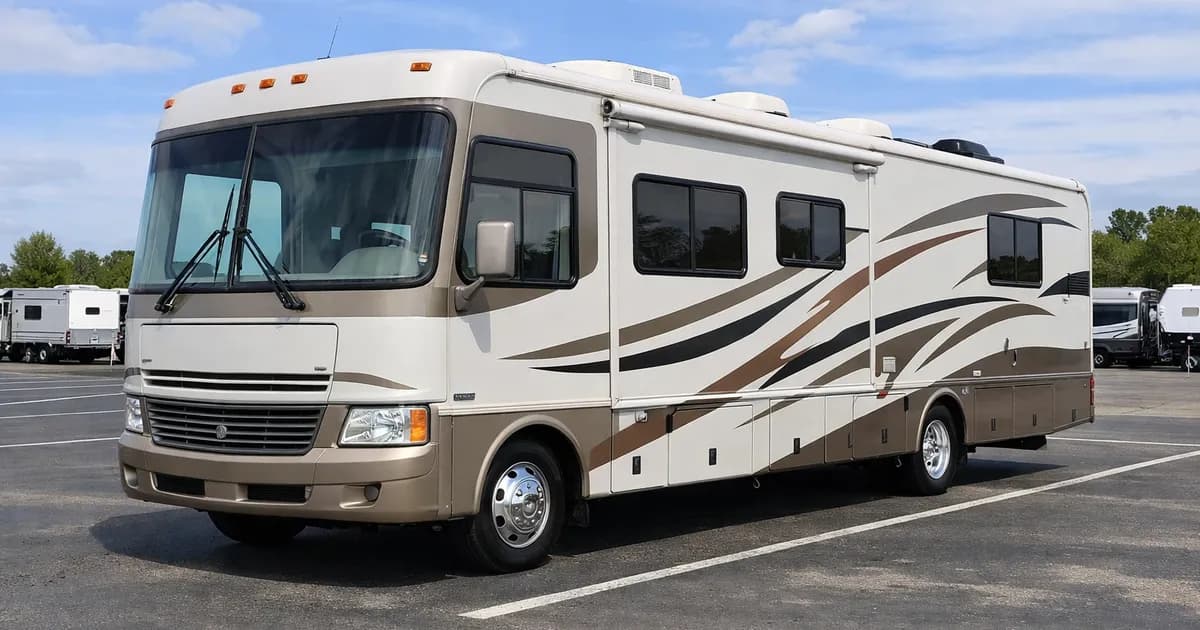
A well-maintained Fiat Ducato or Mercedes Sprinter engine can easily last 250,000 to 310,000 miles. But a motorhome is more than an engine: it’s an engine, a chassis, and the living area. And the three age at different speeds. In practice, what usually kills a motorhome first is not the engine, but the living area, usually because of dampness building up over time. That’s why one with 186,000 miles that’s been looked after can be a better buy than one with 50,000 miles that’s been badly stored.
How many miles does a motorhome last? The answer depends on which part you’re looking at
The question is framed the wrong way. A motorhome has three separate lifespans you need to look at: the engine, the chassis, and the living area. Each one fails at a different pace and for different reasons.
A well-cared-for diesel motorhome engine can reach 250,000 to 310,000 miles. The chassis, unless it has serious rust from poor storage, can last just as long. But the living area is where things get serious after 15 to 20 years because of damp, worn seals, and delamination of sandwich panels, regardless of mileage.
So when an ad says “motorhome with only 37,000 miles,” that number by itself tells you almost nothing. You need to know how old it is, how it was stored, and whether the living area is sound or has damp issues. A 2005 overcab model with 174,000 miles that has always slept indoors may be in better shape than a 2010 low-profile model with 56,000 miles that spent ten winters outside on a vacant lot.
How many miles does a motorhome engine last?
The most common engines in European motorhomes are the Fiat Ducato 2.3 Multijet (130, 140, 150, or 160 hp), the Citroën Jumper and Peugeot Boxer (which share the same engine block as the Ducato), the Mercedes Sprinter 2.1 CDI, the Ford Transit 2.0 TDCi, and the Iveco Daily 3.0 HPI. All of them are workhorse turbodiesels with a well-earned reputation for durability.
- Fiat Ducato 2.3 Multijet: 220,000 to 310,000 miles with up-to-date maintenance. It’s the base engine for many European motorhomes.
- Mercedes Sprinter: 310,000 to 500,000 miles. It’s the longest-lasting of the three giants, but also the most expensive to buy and maintain.
- Ford Transit: 186,000 to 280,000 miles. Very reliable within its range.
- Iveco Daily: 250,000 to 373,000 miles. A light-truck engine designed for heavy commercial use.
To reach those figures, a few things are non-negotiable: quality oil changes every 9,000 to 12,000 miles or every two years, the timing belt or chain replaced on schedule, filters kept up to date, and sensible driving without revving hard when cold or lugging it up long climbs fully loaded.
Maintenance for these engines is also available at any general repair shop because they share their base with work vans. That’s a real advantage over obscure cars: you can find parts and mechanics in almost any city.
How long does a motorhome living area last?
The living area is where the real lifespan is decided. The engine and chassis may be Fiat Ducato parts, but the habitation structure is built from fiberglass, wood, and polyurethane, and every manufacturer does it a little differently.
Modern sandwich-construction bodies without wood (like higher-end Hymer, Carthago, Frankia, and Bürstner models) can last 25 or 30 years without major problems if no water gets in. Traditional builds with an internal wood frame can deteriorate in 10 to 15 years if they’ve had untreated leaks.
What kills a living area is not use, it’s water. A small leak around a skylight can go unnoticed for two or three years, and in that time it can rot several internal beams. By the time it’s spotted, it’s often too late: structural repairs can cost between €2,000 and €10,000, and in many cases the motorhome no longer makes economic sense.
That’s why, when you’re evaluating a used motorhome, checking for damp matters much more than looking at the mileage. Mileage shows up on the dash; damp doesn’t. You have to look for it.
What wears out faster in a motorhome that sits than in one that’s driven?
It’s one of the most counterintuitive ideas in the motorhome world. A motorhome that hardly moves does not stay in better shape. On the contrary, some parts degrade because they’re not being used.
- Tyres: they age as the rubber oxidizes, even if the tread still looks new. After 5 or 6 years, the blowout risk goes up, even if they look perfect.
- Rubber seals and gaskets: door, skylight, and window seals dry out when they’re not used, and that’s where the damp that destroys the living area starts.
- Brake system: rear cylinders and the handbrake can seize if the vehicle sits for months.
- Auxiliary battery: a battery left discharged for months sulfates and loses capacity irreversibly.
- Gas system: hoses and seals age over time, even if the vehicle isn’t used.
- Fluids: oil, brake fluid, and coolant all lose their properties over time, even if the vehicle doesn’t move.
A motorhome with 37,000 miles and 12 years on it can easily need €2,000 or €3,000 in catch-up maintenance just because of age. One with 112,000 miles and 8 years on it, used regularly, may be in better shape. What keeps a motorhome healthy is regular use and indoor storage, not low mileage.
How many miles are too many when buying a used motorhome?
There’s no magic number, but there are rough ranges that help you decide whether the price makes sense.
- Up to 62,000 miles: comfortable zone. The engine is halfway through its life, and you’re not facing major mechanical replacements if maintenance is up to date.
- 62,000 to 124,000 miles: middle zone. Perfectly reasonable if there’s a full maintenance history. Budget for possible clutch work and a timing system replacement.
- 124,000 to 186,000 miles: high zone, but still viable if the motorhome has been very well cared for and the price reflects that. Here, paperwork matters more than ever: if there are no invoices, don’t buy it.
- More than 186,000 miles: risk zone. It only makes sense with a very low price, an inspection by a specialist workshop, and the acceptance that any major breakdown could send it to the scrapyard.
These ranges apply to the engine. For the living area, mileage is not the key number — age and condition are. A 20-year-old living area deserves a specialist inspection no matter what, and once a motorhome gets past 25 years, serious repairs start to show up even on premium brands. If you’re also buying cheap, calculate how much it really costs to get it road-ready before you sign anything.
How do you know if a motorhome’s mileage is real?
Odometer tampering happens with motorhomes too, although less often than with cars because buyers tend to be more experienced and usually ask for paperwork. There are several ways to check without relying on the dash alone.
The first is the full vehicle history report: it often includes mileage readings recorded during official inspections or service visits over the years. If the dash shows 56,000 miles now but an earlier record shows 87,000, something doesn’t add up.
The second is workshop invoices. Invoices often include the vehicle’s mileage at the time of repair. If you have a 2020 invoice showing 74,000 miles and the seller says it now has 59,000, something is off.
The third is physical wear. A polished steering wheel, a worn clutch pedal, a driver’s seat that has sunk, and a gear knob that’s shiny from use are all signs of real mileage. If the vehicle shows 37,000 miles but looks like it’s done 124,000, the odometer is lying.
Which mileage is worth it depending on the vehicle’s age?
This is the key comparison. Don’t look at mileage on its own — compare it with the age.
- Under 5 years old and under 31,000 miles: probably a private motorhome with light use. All good.
- Under 5 years old and over 50,000 miles: likely a former rental. Not a bad buy, but the price should reflect the extra wear.
- 5 to 10 years old and 31,000 to 62,000 miles: sweet spot. Regular private use.
- 5 to 10 years old and under 19,000 miles: be careful. A motorhome that has sat around too much may have suffered from lack of use.
- Over 10 years old and over 124,000 miles: only valid if maintenance is documented and the living area is in good shape. Inspect the whole motorhome before deciding.
- Over 15 years old: mileage matters less than damp and the structural condition of the living area.
The key point is that nobody buys just an engine or just a living area — you buy the whole package. A motorhome with a perfect engine but a rotten living area is useless, and the reverse is no better. Before you focus on the number on the dash, check the key points of the whole vehicle: engine, chassis, living area, and interior systems. Mileage is just one data point, not the only one.
With AskPancho you can analyze a used motorhome step by step, with questions tailored to the exact model and mileage, and get a report that separates the condition of the engine, chassis, and living area. Cheap shouldn’t end up expensive.