
How Much Does It Really Cost to Get a Used Motorcycle Road-Ready?
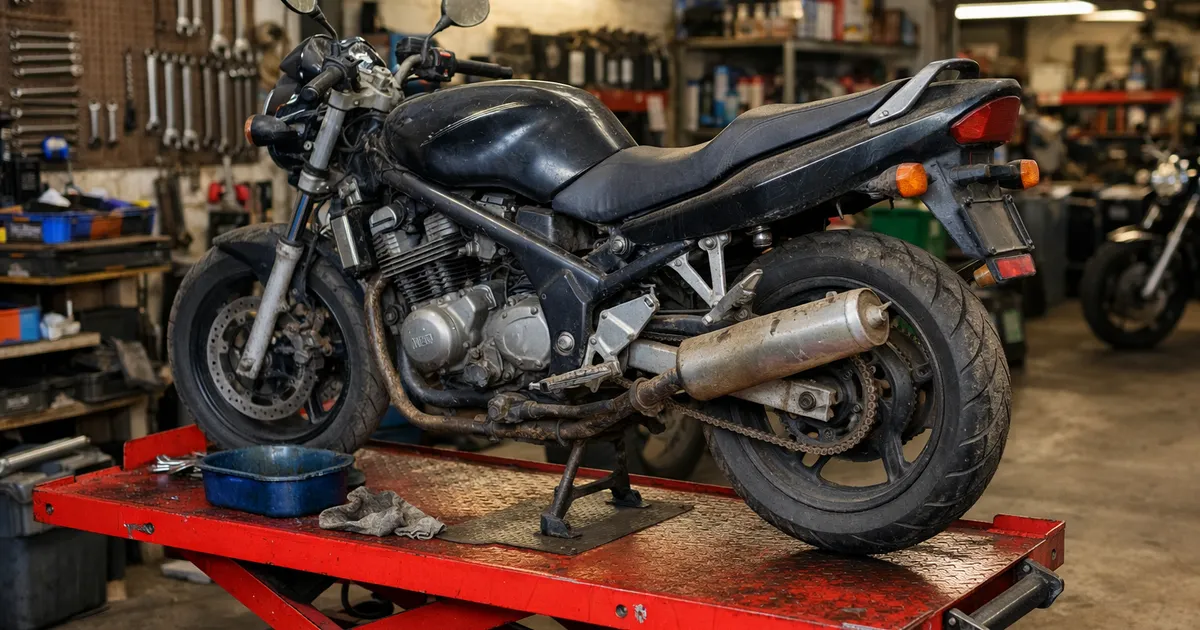
Buying a used motorcycle for 3,000 euros and then having to spend another 800 getting it road-ready is not a disaster, as long as you know that before you buy. What turns a good price into a bad purchase is not calculating it.
What maintenance costs are almost unavoidable on any used motorcycle?
Oil and filter. This is the first thing to check. If you do not have an invoice for a recent change, replace them. Motorcycle oil is slightly more expensive than car oil, and the filter varies by model. It costs between 30 and 70 euros in parts. In a workshop, including labor, expect between 50 and 100 euros.
Brake pads. Pads are cheap and easy to replace, but many people stretch them too far. A set of pads for one axle costs between 15 and 40 euros. If the discs are scored or have a pronounced lip, replacing a disc can cost between 40 and 120 euros.
Drive chain kit. Chain, front sprocket, and rear sprocket. If the chain is loose, rusty, or the teeth on the sprockets are sharp, the full kit needs replacing. It costs between 80 and 250 euros in parts, plus labor (between 50 and 100 euros).
Brake fluid. If it is dark or has not been changed in more than 2 years, replace it. The fluid costs between 10 and 20 euros, and the labor is minimal.
These four points are the foundation. If the motorcycle has recent invoices for all of them, you are already starting from a much better position. If it does not, add between 150 and 300 euros before calculating anything else.
How many miles is too many for a used motorcycle when extra costs depend on its condition?
Tires. Motorcycle tires last less than car tires and are proportionally more expensive. A set of two tires can cost between 100 and 300 euros depending on size and brand, plus mounting and balancing (between 20 and 40 euros per wheel). A tire that is more than 5 or 6 years old, even if it still has good tread, loses grip. Always check the manufacturing date in the DOT code.
Battery. Motorcycle batteries usually last between 2 and 5 years. If the bike is hard to start or the battery is more than 3 years old, it probably needs a new one. It costs between 30 and 100 euros depending on the type.
Fork seals. If the fork tubes are wet with oil, the seals are leaking. Replacing them costs between 50 and 150 euros including labor. If you do not replace them, the oil can contaminate the front brake pads and reduce braking performance.
Coolant. If the motorcycle has liquid cooling, check the level and color. If it is cloudy or low, replace it. The product costs between 10 and 20 euros.
Which used motorcycles have the fewest problems when small parts add to the total cost of getting it ready?
Spark plug. A cheap part (between 5 and 20 euros) that greatly improves starting and engine response if it has not been changed in a while. On multi-cylinder motorcycles, the cost multiplies.
Air filter. If it is dirty or clogged, the engine cannot breathe properly. It costs between 10 and 30 euros.
Brake bleeding. If the brake feel is spongy, the system may need bleeding. It costs between 20 and 40 euros at a workshop.
Non-homologated exhaust. If the motorcycle has an aftermarket exhaust and does not have an approval certificate, it may fail the State Vehicle Inspection with that exhaust. Replacing it with an approved exhaust can cost between 100 and several hundred euros depending on the model. This is an expense many people forget to factor into the road-ready budget.
How to tell if a motorcycle has been dropped by calculating the real cost of a used motorcycle
The basic road-ready prep for a used motorcycle (oil, filters, pads, brake fluid, chain adjustment) can cost between 100 and 250 euros. If it also needs tires, a drive chain kit, a battery, or fork seals, you can easily reach 400 or 700 euros. That does not mean the purchase is bad, but it does mean the real price of the bike is not the one in the ad.
The formula is simple: ad price + estimated road-ready costs = real purchase price. If that total is higher than the market value of an equivalent motorcycle in good condition, the bargain stops being a bargain. If it is lower, it can be a good deal even if the bike needs work.
Do that calculation before negotiating, not after. If you know exactly what it will cost to get it ready, you can negotiate from a strong position. If the seller will not lower the price to reflect what the bike needs, you simply know it is not a good deal for you. Add those costs before you negotiate.
With AskPancho, you can inspect the bike step by step and get a clear idea of what it needs. Pancho helps you spot the expenses ahead so you can decide with all the information. Cheap should not end up costing you more.